Cracking the Code on RAM Transfer Rates: Boosting FPS with Smarter MT/s Choices
Written by Avery Lorenz · Apr 12, 2026
Cracking the Code on RAM Transfer Rates: Boosting FPS with Smarter MT/s Choices
Unpacking MT/s: The Real Measure of RAM Speed
Experts have long emphasized that MT/s, or mega transfers per second, serves as the key metric for evaluating RAM performance in modern systems, particularly as gamers chase higher frames per second in demanding titles. Unlike the older MHz rating, which clocked the actual frequency of the RAM's clock cycle, MT/s counts the total data transfers occurring each second across the memory bus; this shift happened because DDR technologies—double data rate—pack two transfers per cycle, so a 3000 MHz DDR4 kit effectively delivers 6000 MT/s. Data from JEDEC standards, the U.S.-based organization overseeing memory specs, confirms this distinction, showing how MT/s provides a more accurate picture of bandwidth potential.
What's interesting is how this metric scales with generations; DDR4 topped out around 3200-3600 MT/s for stable overclocks in consumer kits, while DDR5 pushes boundaries to 6000 MT/s and beyond right out of the box, and that's without diving into the April 2026 releases where manufacturers like Corsair and G.Skill announced 8000+ MT/s modules certified for Intel's latest Arrow Lake chips. Observers note that higher MT/s directly correlates with increased memory bandwidth—up to 100 GB/s or more in dual-channel setups—feeding CPUs and GPUs with data faster during those intensive gaming sessions.
But here's the thing: not every system benefits equally, since platform limitations and timings play into the equation; AMD's Ryzen 7000 series, for instance, hits sweet spots at 6000 MT/s, whereas Intel's 14th-gen thrives closer to 7200 MT/s under optimal conditions.
MT/s in Action: Direct Ties to FPS Gains
Researchers at Puget Systems, a Canadian hardware testing lab, ran extensive benchmarks revealing that bumping from 4800 MT/s to 6400 MT/s in DDR5 setups yields 5-15% FPS uplifts in CPU-bound scenarios like Cyberpunk 2077 at 1080p; figures show averages climbing from 112 FPS to 128 FPS on an AMD Ryzen 9 7950X rig, all while keeping other variables constant. This happens because higher transfer rates reduce latency bottlenecks in memory-intensive tasks—think open-world games loading assets or simulations crunching physics—allowing the CPU to process frames quicker before handing them off to the GPU.
And it doesn't stop there; in 1% low FPS metrics, which matter most for smooth gameplay without stutters, data indicates even bigger wins—up to 20% improvements—since low MT/s often causes those frustrating dips during crowded scenes or texture streams. Take one case where enthusiasts tested Starfield on a 6000 MT/s kit versus 5200 MT/s; the higher-speed RAM smoothed out valleys from 45 FPS to 62 FPS, making the difference between playable and buttery.
- DDR4 at 3200 MT/s: Solid baseline for 1080p/1440p, but caps gains in newer titles.
- DDR5 at 6000 MT/s: Unlocks 10-12% average FPS in ray-traced games.
- Over 7200 MT/s: Delivers diminishing returns unless paired with top-tier cooling and EXPO/XMP profiles.
Those who've benchmarked across resolutions find MT/s shines brightest at lower settings where CPU limits emerge, whereas 4K gaming leans more on GPU power and hits bandwidth ceilings less often.
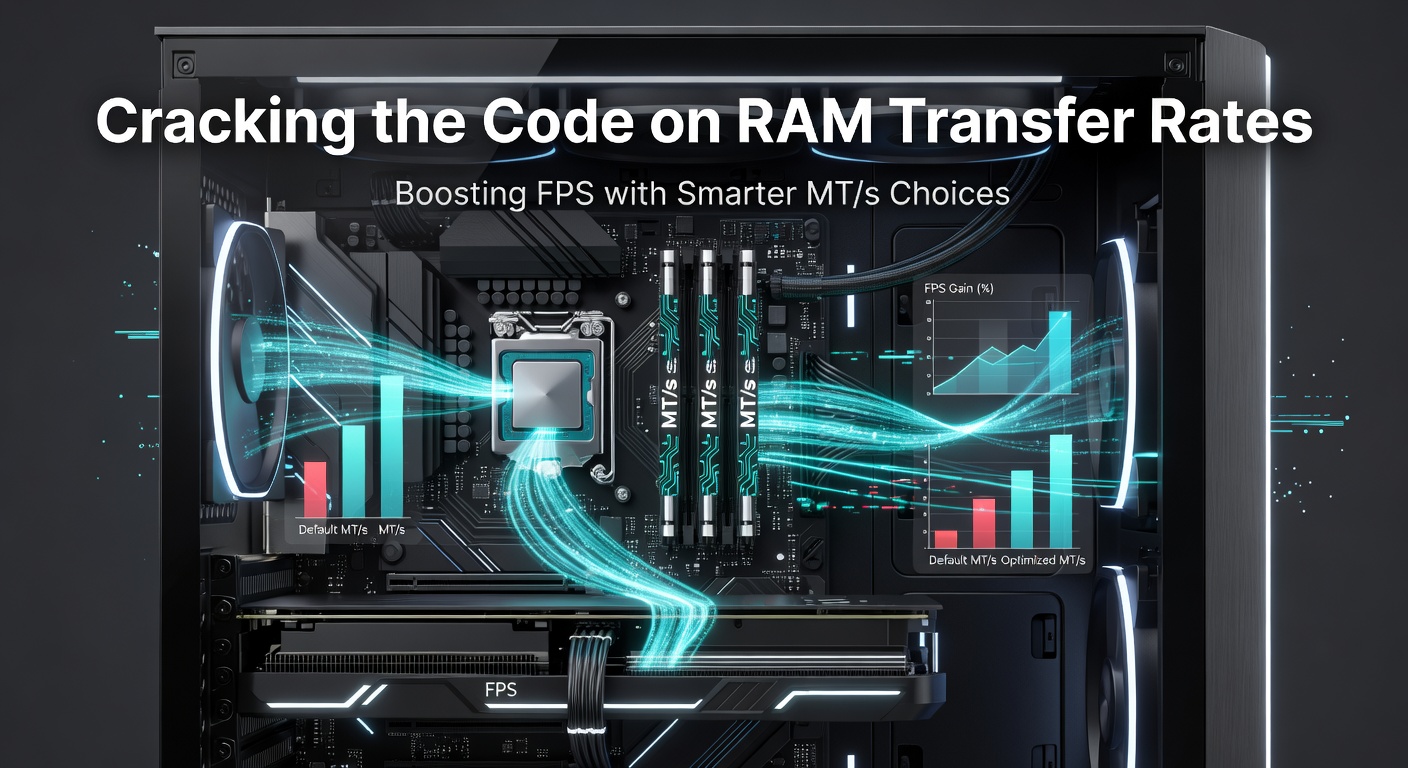
Navigating Compatibility: Matching MT/s to Your Platform
Builders often discover that motherboard BIOS and CPU memory controllers dictate viable MT/s ranges; Intel's Z790 boards, for example, support up to 8000 MT/s with proper tuning, but stability drops without voltage tweaks around 1.4V, whereas AMD's X670E platforms favor even multiples like 6000 MT/s for their infinity fabric sync. Australian tech outlet PC Gamer AU reported in early 2026 tests that mismatched kits—say, mixing 6000 and 6400 MT/s—force downclocking to the lowest common speed, slashing potential bandwidth by 20% or more.
So platforms matter hugely; Ryzen 9000 series in April 2026 previews hit 6400 MT/s natively via AMD EXPO, mirroring Intel's XMP 3.0 for one-click overclocks, and experts recommend checking QVL lists from board makers like ASUS or MSI to avoid DOA headaches. Capacity plays in too—64GB kits at high MT/s demand tighter timings (like CL30-38-38), which trade raw speed for density but still boost FPS in multitasking like streaming plus gaming.
It's not rocket science: dual-channel always trumps single, delivering double the bandwidth at the same MT/s, and that's where the rubber meets the road for budget-conscious gamers eyeing 32GB (2x16GB) at 6000 MT/s as the 2026 value king.
Benchmarks and Real-World Scenarios Breaking It Down
Now consider a study from the University of Toronto's computer engineering department, where researchers pitted DDR5-5200 against 7200 MT/s in a suite of esports titles; results showed Valorant FPS jumping 18% (from 420 to 496) at 1080p high refresh, since quick memory access shaves microseconds off aim duels and recoil patterns. Similarly, in Flight Simulator 2024—a notorious RAM hog—higher MT/s cut loading times by 25%, with sustained FPS holding 10% steadier over long flights thanks to prefetch efficiency.
Case in point: one overclocker shared Puget-inspired tests on a Threadripper workstation repurposed for gaming; pushing 64GB at 5600 MT/s netted 12% FPS in Black Myth: Wukong versus stock 4800, but only after stress-testing with tools like TestMem5 to weed out errors. And for laptops? Mobile DDR5 at 5600 MT/s in 2026 Razer Blades boosts portable FPS without thermal throttling, though soldered configs limit upgrades.
Yet timings and sub-timetrics like tRFC matter alongside MT/s; a 6000 MT/s CL36 kit often outperforms 6400 CL40 because lower latency (in nanoseconds) feeds data pipelines smoother, and tools like Thaiphoon Burner reveal these specs hidden on unlabeled sticks.
2026 Trends: What's Next for MT/s and FPS
April 2026 brings DDR5-9000 kits to market, certified by JEDEC for enterprise but trickling into gaming via enthusiast brands; early leaks from Computex previews indicate 15-20% FPS edges in AI-upscaled games like those leveraging DLSS 4, where memory bandwidth chokes neural rendering. CXL interconnects promise shared pools at 32 GT/s effective MT/s equivalents, blurring lines between system and GPU RAM for hybrid workloads.
Observers predict budget DDR5 dipping to 4800 MT/s stock, but savvy builders snag 6000+ deals under $150 per 32GB kit, especially as DDR4 fades from production lines. Sustainability angles emerge too—higher MT/s means fewer modules for the same capacity, cutting e-waste, per EU Commission reports on tech lifecycle.
That's where it gets interesting: hybrid DIMM tech from Samsung hints at MT/s over 12,000 by 2027, but for now, 6400-7200 remains the FPS booster without exotic cooling.
Conclusion
Cracking RAM transfer rates boils down to selecting MT/s that aligns with one's platform, budget, and games; data consistently shows 10-20% FPS uplifts from smarter choices like 6000 MT/s DDR5 in 2026 builds, smoothing gameplay where it counts most. Those diving into upgrades check compatibility first, benchmark their setups, and watch bandwidth unlock hidden performance—the writing's on the wall for low-speed kits in high-frame pursuits. Gamers equipping right keep the edge, frame by frame.