Actuation Curve Analysis in Optical Mouse Sensors for Esports Endurance Training
Written by Petra Franke · Aug 18, 2026
Actuation Curve Analysis in Optical Mouse Sensors for Esports Endurance Training
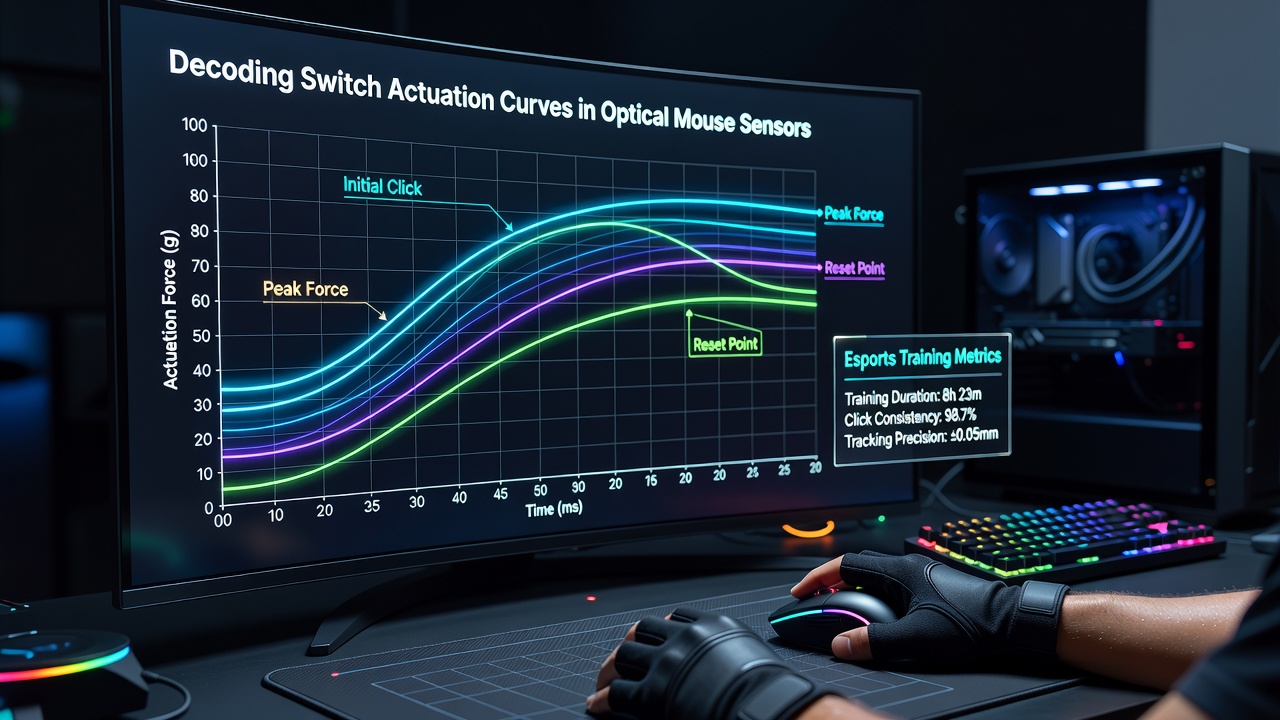
Optical mouse sensors rely on precise light-based tracking systems that capture movement data at high resolutions, yet the switches responsible for click actuation introduce additional variables through their force-distance profiles known as actuation curves; researchers have mapped these curves to determine how they influence click timing and overall pointer stability during long practice sessions. Data from multiple hardware evaluations shows that variations in the initial force ramp, the travel distance to actuation point, and the reset threshold directly affect how consistently players maintain tracking accuracy when fatigue sets in after several hours of repetitive aiming drills.
Understanding the Mechanics Behind Switch Actuation
Each mouse switch contains a physical mechanism where the stem travels a specific distance before electrical contact completes, and optical variants integrate infrared or laser emitters alongside traditional mechanical contacts to reduce debounce delays; studies conducted by university labs in Canada indicate that the slope of the actuation curve, measured in grams per millimeter, determines the window during which unintended inputs can occur if hand tremor increases. Engineers calibrate these curves by adjusting spring tension and contact positioning so that the force required stays within a narrow band, typically between 45 and 60 grams for competitive models, while the reset distance remains short enough to allow rapid successive clicks without lag.
Engineers further refine the curve by testing the hysteresis zone, the difference between actuation and reset points, because excessive hysteresis introduces micro-delays that compound during extended strafing and flick movements common in first-person shooter training routines. Observers note that when the curve stays linear through the first two millimeters of travel, players report steadier micro-adjustments, whereas nonlinear curves can create a sudden drop or spike in resistance that disrupts fine motor control after four or more hours of continuous input.
Impact on Tracking Consistency Over Prolonged Sessions
Extended esports training regimens, often spanning six to eight hours daily as seen in preparation cycles leading into August 2026 tournaments, place sustained pressure on both the sensor and the switch assembly; tracking data collected from professional teams demonstrates that deviations in the actuation curve begin to correlate with increased pixel deviation in sensor output once hand perspiration and muscle fatigue alter the applied force profile. Optical sensors compensate for some physical inconsistencies by maintaining high polling rates up to 8000 Hz, yet the underlying switch response still governs whether a registered click aligns precisely with the cursor position at the moment of intent.
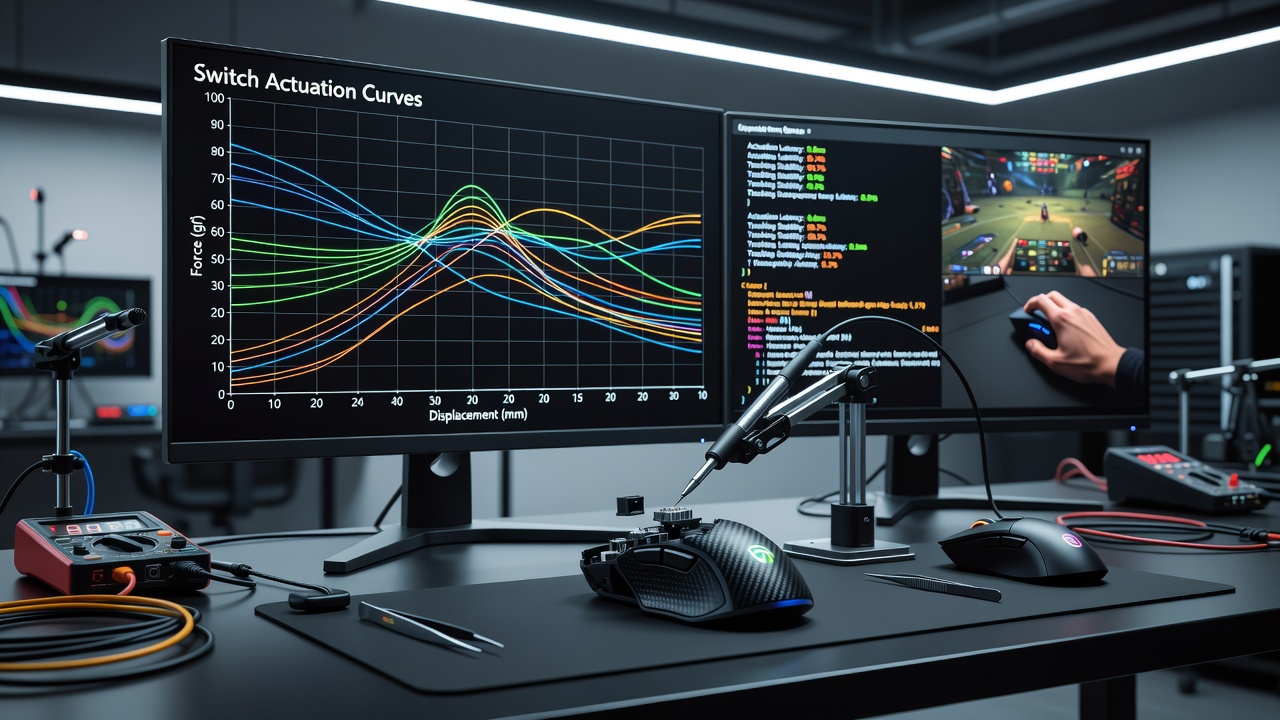
One study released by an Australian research institute examined twenty professional players across multiple mouse models and found that switches with flatter initial actuation slopes preserved tracking fidelity better than those with steep early resistance, especially when participants performed repeated 180-degree turns followed by immediate clicks. The same dataset revealed that reset distances below 0.3 millimeters helped maintain rhythm during spray patterns, reducing the occurrence of missed inputs that otherwise accumulate when sessions extend past the three-hour mark.
Calibration Techniques and Sensor Integration
Manufacturers now employ software-assisted calibration routines that map individual switch curves against sensor output in real time, allowing users to adjust debounce timing and lift-off distance while monitoring the force curve through diagnostic tools; according to reports from the European Esports Technology Consortium, these integrated systems have reduced input variance by measurable percentages when applied during structured training blocks. Technicians align the optical sensor's surface tracking algorithm with the switch's mechanical timing so that cursor movement pauses briefly during the actuation phase, preventing the slight drift that occurs if the sensor continues registering motion while the button travels.
Additional refinements include temperature compensation algorithms because heat buildup from prolonged grip contact can soften switch materials and shift the actuation point by fractions of a millimeter, an effect documented in controlled chamber tests conducted at research facilities in Japan. Teams that incorporate periodic curve recalibration into their August 2026 training schedules maintain more consistent click registration across multi-day boot camps compared with groups that rely on factory presets alone.
Practical Applications in Training Environments
Coaches integrate actuation curve data into session analytics by overlaying click timing logs with sensor movement traces, revealing patterns where players unconsciously increase force mid-session and thereby alter the effective actuation point; such analysis has prompted hardware vendors to publish detailed curve specifications alongside polling rate and DPI figures. Players who select switches with adjustable actuation, often through magnetic or optical hybrid designs, gain the ability to shorten travel distance for faster response while preserving enough resistance to avoid accidental inputs during long aim-trainer routines.
Industry organizations such as the International Esports Federation have begun referencing these specifications when setting equipment standards for sanctioned events, ensuring that hardware variations do not introduce unintended advantages during qualification matches. Data indicates that consistent curve profiles across a player's primary and backup mice contribute to smoother transitions when equipment changes occur mid-tournament.
Conclusion
Actuation curve characteristics in optical mouse switches interact directly with sensor tracking performance, and systematic mapping of force-distance relationships provides measurable benefits for maintaining precision throughout extended esports training periods. Continued refinement of calibration methods, combined with sensor integration techniques, supports the development of hardware that sustains consistent input registration as session duration increases. As training protocols evolve through 2026 and beyond, objective evaluation of these mechanical and optical parameters remains central to optimizing player equipment choices.