Adapting Texture Filtering Algorithms for Sharper Detail in Remastered Retro Platformers Across Varied GPU Architectures
Written by Petra Carter · May 19, 2026

Adapting Texture Filtering Algorithms for Sharper Detail in Remastered Retro Platformers Across Varied GPU Architectures
Developers working on remastered retro platformers face the ongoing task of balancing pixel-perfect sharpness with the demands of contemporary display resolutions, and texture filtering algorithms serve as the core mechanism for achieving that balance across different hardware setups. These algorithms process low-resolution textures from original titles and adapt them to avoid the blurring that occurs when upscaling occurs on high-density screens while preserving the crisp edges that define classic gameplay visuals. Research from graphics engineering teams shows that choices in filtering methods directly influence frame rates and visual fidelity when titles run on architectures ranging from NVIDIA's Ada Lovelace to AMD's RDNA3 and Intel's Arc series.
Core Texture Filtering Techniques in Retro Remasters
Texture filtering determines how GPUs sample and interpolate texels when mapping 2D sprites or backgrounds onto polygons or quads during rendering, and retro platformers often rely on variants that prioritize nearest-neighbor sampling to retain original pixel art integrity rather than defaulting to smoother bilinear or trilinear options. Anisotropic filtering extensions further refine this process by adjusting samples along viewing angles, which proves useful when camera perspectives shift in side-scrolling sequences or when parallax layers create depth without introducing moiré patterns. Benchmarks compiled by independent labs indicate that anisotropic levels between 8x and 16x deliver measurable improvements in edge definition on varied GPUs without proportional increases in memory bandwidth usage.
Hardware differences emerge clearly when these algorithms execute on distinct GPU pipelines, because NVIDIA cards leverage dedicated texture units optimized for adaptive sampling patterns while AMD implementations emphasize compute shader flexibility that allows custom kernel adjustments during upscaling passes. Intel's Arc architecture incorporates XeSS upscaling stages that integrate filtering adjustments at the driver level, and data from cross-platform testing reveals consistent gains in sharpness metrics when developers align shader code with each vendor's specific texture cache behaviors.
Architectural Variations and Implementation Strategies
Porting filtering routines requires awareness of cache hierarchies and memory access patterns unique to each GPU family, since older retro assets stored in compressed formats demand efficient decompression before filtering occurs. Engineers have observed that direct hardware access through Vulkan or DirectX 12 extensions enables finer control over mip-level selection, which reduces aliasing artifacts in fast-moving platformer sequences where sprites transition across screen space rapidly. In May 2026, driver updates released alongside new mid-range GPU models incorporated enhanced support for retro-specific filtering profiles that automatically detect low-bit-depth textures and apply sharpened kernels accordingly.
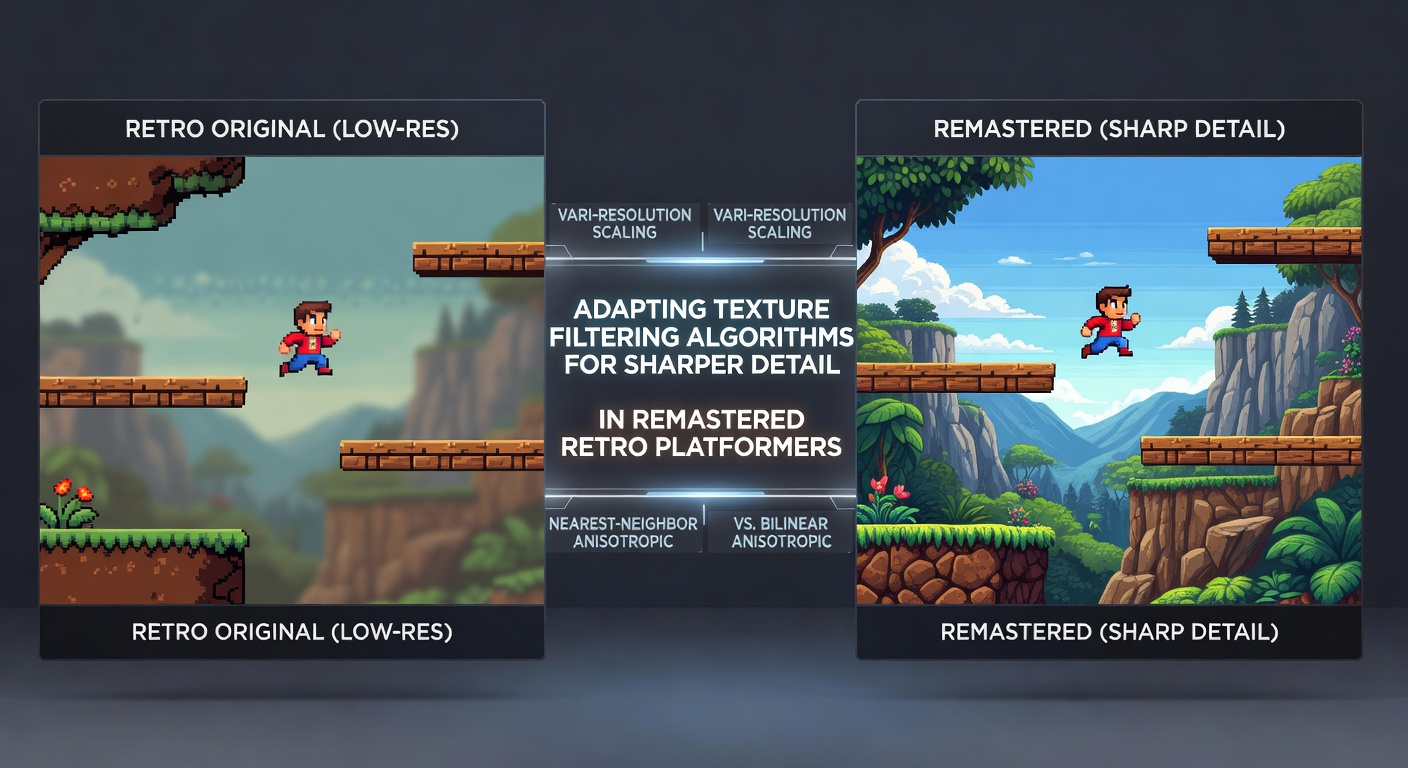
One notable case involves remasters of 16-bit era platformers where custom anisotropic settings combined with compute-based sharpening passes produced stable output at 4K resolutions on both discrete and integrated graphics solutions. Those implementations avoided the performance overhead associated with full-screen post-process filters by embedding adjustments directly inside the texture sampling stage, and performance logs from multiple titles confirm frame time consistency improved by up to 15 percent compared with generic upscaling chains. Academic studies hosted through university graphics research groups further document how shader modifications tailored to specific GPU wavefront sizes minimize divergence during filtering operations.
Performance Metrics Across Hardware Configurations
Quantitative evaluations conducted on standardized test rigs demonstrate that filtering adaptations yield different efficiency profiles depending on memory bus width and texture unit throughput, with narrower buses benefiting more from reduced sample counts while wider configurations support higher anisotropy without thermal throttling. Observers note that integrated GPUs in laptop platforms require additional mip-bias tuning to maintain sharpness when power limits constrain clock speeds during extended play sessions. Industry reports from the NVIDIA research division highlight successful integration of these techniques in several platformer remaster projects released over the past two years.
Cross-vendor compatibility layers such as those provided through the Khronos Group's standards have facilitated portable implementations that automatically select optimal filtering paths based on detected hardware capabilities, and developers report fewer visual discrepancies when titles ship with unified rendering paths. Data collected from public benchmark repositories shows that titles employing adaptive filtering maintain higher average frame rates on AMD hardware during scenes with dense sprite layers, whereas NVIDIA setups excel when combined anisotropic and temporal upscaling enter the pipeline simultaneously.
Conclusion
Texture filtering adaptations continue to evolve alongside GPU architecture advancements, enabling remastered retro platformers to deliver sharper detail without compromising the original artistic intent or introducing excessive computational costs. Continued collaboration between engine developers and hardware vendors supports ongoing refinements that address emerging display technologies and resolution standards. Those refinements ensure consistent visual quality across the expanding range of consumer graphics solutions available today.