Analyzing Pixel Response Times in OLED Panels for Reduced Motion Blur in Fast-Paced Fighting Game Competitions
Written by Petra Carter · Jun 7, 2026
Analyzing Pixel Response Times in OLED Panels for Reduced Motion Blur in Fast-Paced Fighting Game Competitions
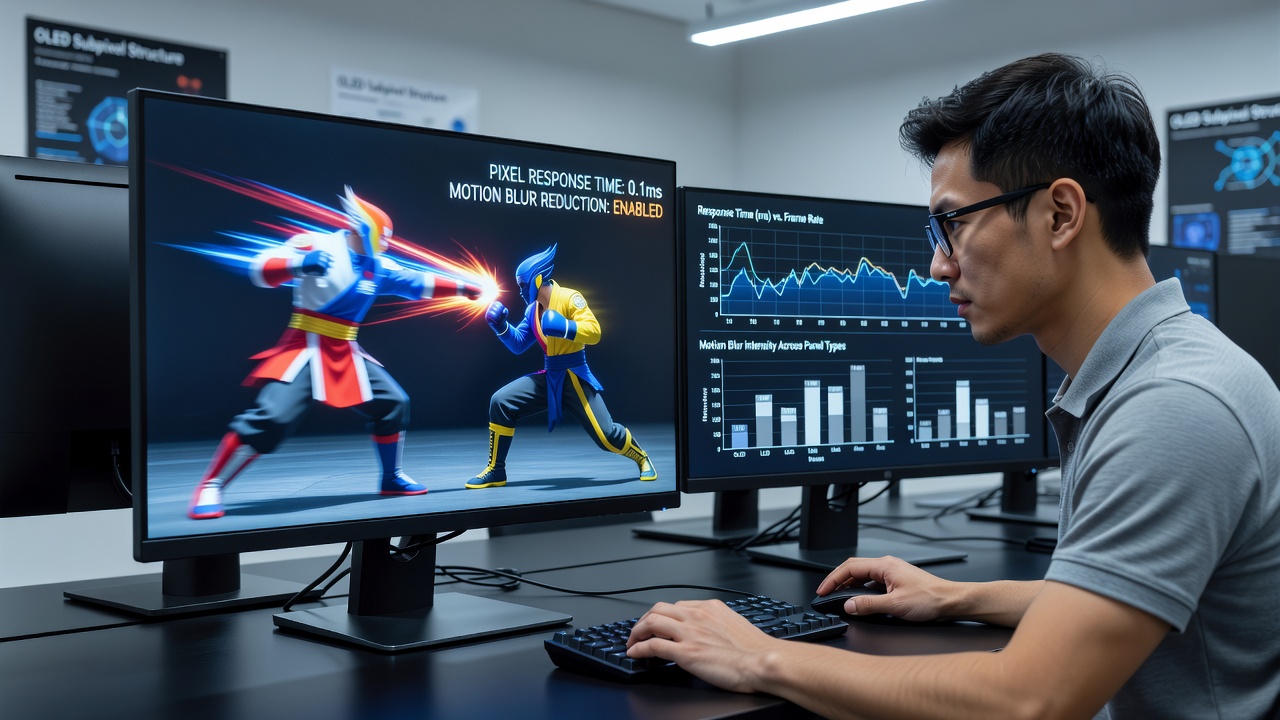
Pixel response times measure how quickly individual pixels on a display can change from one color to another, and this factor plays a central role in minimizing motion blur during rapid on-screen action. In OLED panels the organic light-emitting diodes switch states in microseconds, which stands in contrast to the millisecond-range transitions typical of many LCD technologies, and researchers have documented these differences through standardized testing protocols established by industry groups such as the Society for Information Display.
Fundamentals of Pixel Response in Display Technologies
OLED architecture allows each pixel to emit its own light and turn off completely when black is required, whereas LCD panels rely on backlights filtered through liquid crystals that require additional time to twist and untwist. Data from laboratory measurements indicate that top-tier OLED panels achieve gray-to-gray response times below 0.1 milliseconds, and this speed directly reduces the persistence of previous frames on screen during high-velocity character movements common in fighting game titles. Observers note that such performance becomes especially relevant when players execute frame-perfect combos or react to split-second animations at tournament settings running 120 frames per second or higher.
Impact on Motion Clarity in Competitive Fighting Scenarios
Fast-paced fighting game competitions feature characters moving across stages at speeds that exceed 60 pixels per frame on standard displays, and any residual pixel persistence creates trailing artifacts that obscure critical visual cues. Studies conducted at display research facilities in Japan and South Korea have shown that OLED panels maintain edge definition on moving sprites even when camera pans or character dashes occur, and participants in controlled viewing tests reported fewer instances of perceived smear compared with LCD counterparts under identical refresh conditions. Tournament organizers in June 2026 have begun specifying OLED monitors for main stages at major events, citing consistent visual fidelity across multiple viewing angles and reduced eye strain during extended bracket play.
Measurement Standards and Testing Methodologies
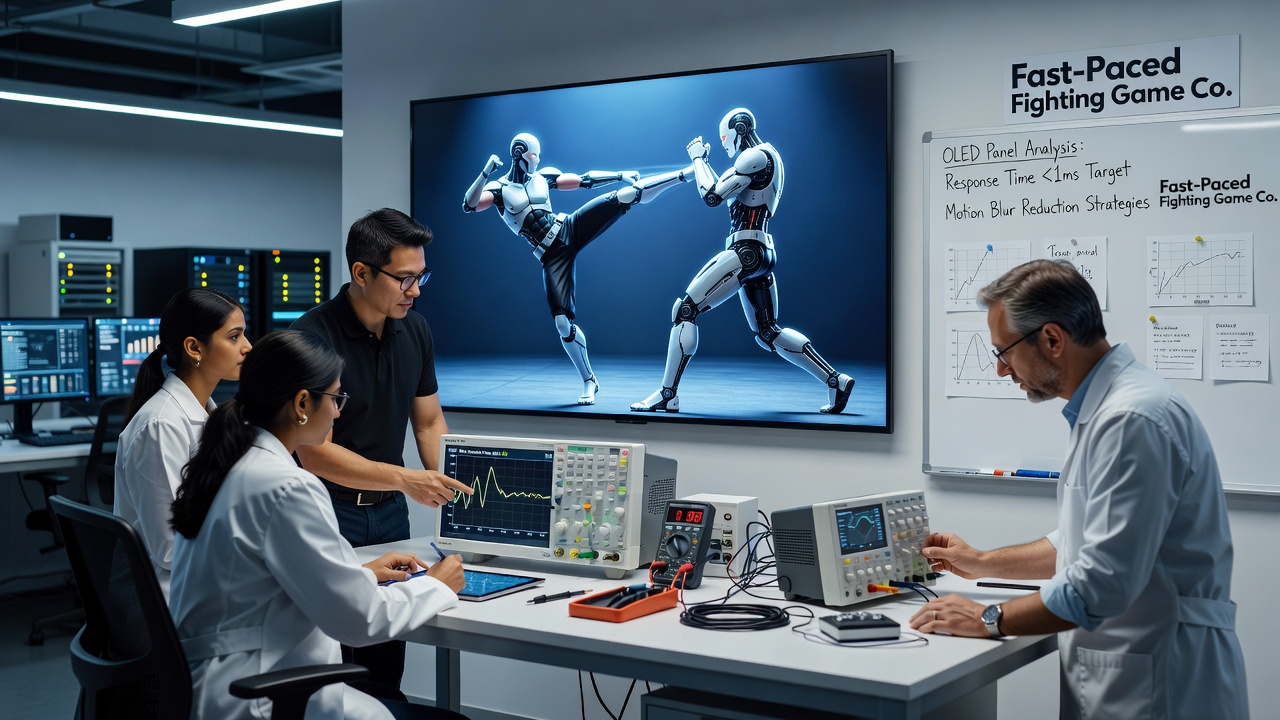
Response time evaluation follows protocols that capture both rise and fall transitions across a range of gray levels, and equipment from manufacturers such as Westar Display Technologies provides the hardware used by independent labs to generate these figures. When analysts plot these values on response-time charts, OLED curves remain nearly flat across luminance levels, whereas LCD curves exhibit spikes at darker transitions that contribute to blur accumulation. Figures released by the Video Electronics Standards Association reveal that panels meeting DisplayHDR True Black criteria often pair their contrast advantages with sub-millisecond switching, and this combination supports cleaner rendering of particle effects and rapid foreground-background separation in games that rely on precise hitbox visualization.
Integration with High Refresh Rates and Variable Refresh Technologies
Modern fighting game setups frequently combine OLED panels with 144 Hz or 240 Hz refresh rates along with variable refresh rate support, and the low response times allow these higher frequencies to deliver their full benefit without motion artifacts masking the increased temporal resolution. Research from European academic consortia has quantified the reduction in motion blur width when response time drops below one millisecond at 240 Hz, showing measurable gains in edge sharpness that align with the visual demands of games requiring constant tracking of opponent animations. Players in competitive circuits have adopted these displays for training rigs because the absence of sample-and-hold blur from slower panels preserves the intended frame timing of game engines.
Considerations for Broadcast and Spectator Viewing
Event streams and on-site jumbotrons must also handle the same fast motion without introducing additional blur from capture or encoding pipelines, and OLED source monitors help maintain signal integrity before content reaches secondary displays. Broadcasters covering the June 2026 circuit have reported fewer viewer complaints about visual clarity when primary feeds originate from OLED-equipped stations, and calibration standards from the International Telecommunication Union guide color and motion reproduction to match the low-latency characteristics of the original panels. This consistency matters because spectators rely on the same visual information as competitors when analyzing replays or discussing match outcomes.
Future Developments in OLED Panel Performance
Manufacturers continue to refine tandem OLED structures and micro-lens arrays that further accelerate pixel switching while preserving brightness and longevity, and pilot production lines in Taiwan have demonstrated response times approaching 0.01 milliseconds in prototype gaming panels. Industry reports indicate that these advances will coincide with wider adoption of 480 Hz prototypes by late 2026, and the combination could set new benchmarks for blur reduction in environments where every millisecond of visual persistence affects competitive outcomes. Calibration tools developed by standards bodies ensure that end users can verify panel performance remains within specification after extended use.
Conclusion
Analysis of pixel response times in OLED panels demonstrates clear advantages for maintaining motion clarity in fast-paced fighting game competitions, supported by laboratory data and tournament deployment patterns observed through 2026. Continued refinement of these display characteristics aligns directly with the technical requirements of high-frame-rate esports environments where visual precision determines performance margins.