Custom Cooling Curves in Compact PC Cases: How Targeted Airflow Adjustments Influence Multiplayer Session Stability Across Esports Titles
Written by Avery Lorenz · May 17, 2026
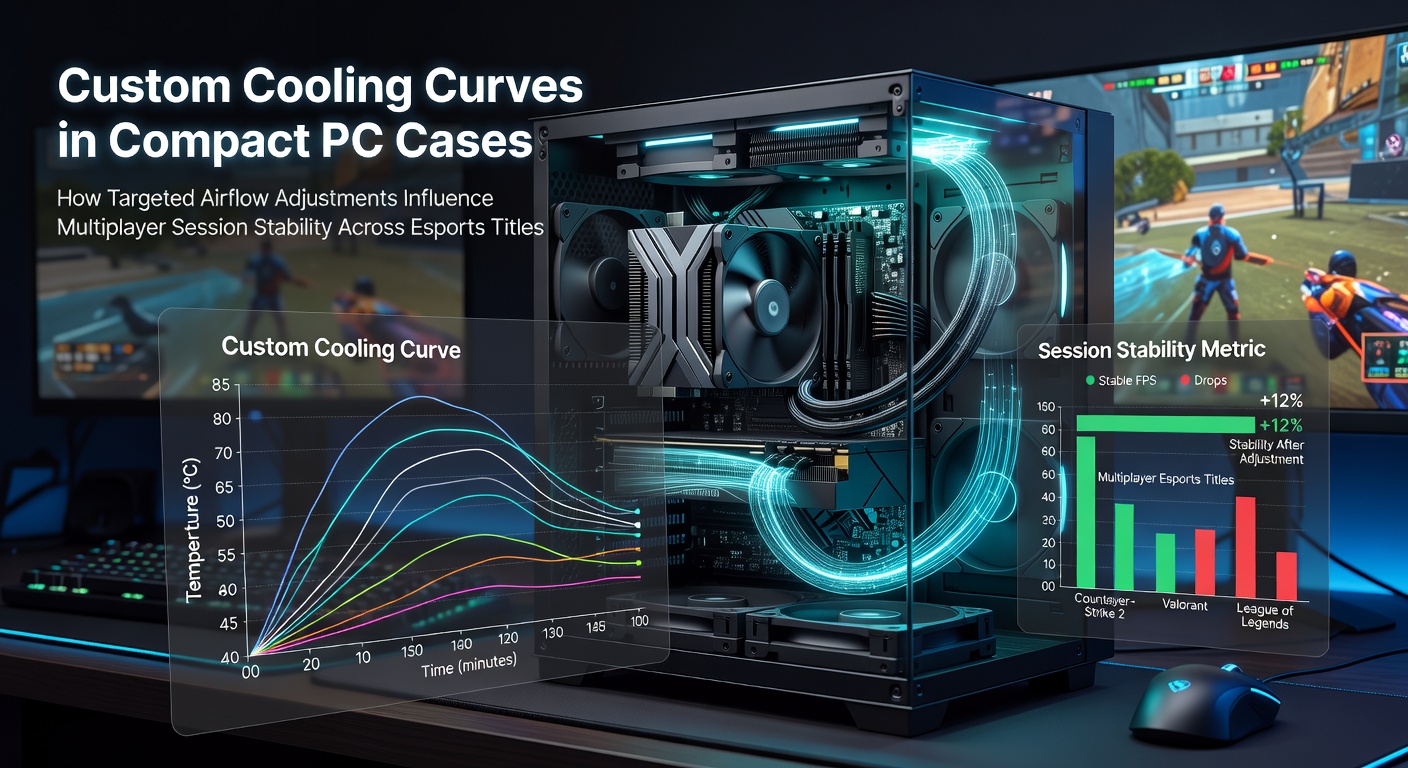
Custom Cooling Curves in Compact PC Cases: How Targeted Airflow Adjustments Influence Multiplayer Session Stability Across Esports Titles
Compact PC cases have gained traction among competitive players who balance portability with high-performance demands, yet these smaller enclosures introduce distinct thermal constraints that standard cooling profiles often fail to address fully. Custom cooling curves allow precise control over fan speeds based on real-time temperature readings from CPU, GPU, and other components, which in turn supports sustained clock rates during extended multiplayer matches.
Engineers design these curves through software interfaces that map temperature thresholds to PWM signals, enabling fans to operate at lower speeds during idle periods while ramping up aggressively when loads spike. This approach reduces unnecessary noise and power draw without sacrificing the ability to dissipate heat generated by sustained 1080p or 1440p esports workloads.
Thermal Dynamics in Small Form Factor Builds
Smaller chassis restrict airflow paths compared to full-tower systems, so hot air pockets can form near heat-generating parts unless fans follow tailored response patterns. Observers note that generic BIOS fan settings frequently leave components hovering near throttling limits after 30 to 45 minutes of continuous play, whereas adjusted curves maintain headroom by activating intake and exhaust fans at staggered intervals.
Data from hardware monitoring tools shows temperature reductions of 8 to 12 degrees Celsius in GPU junctions when custom profiles replace default linear ramps, and this stability directly correlates with fewer frame-time spikes across sessions lasting multiple hours. Researchers at institutions studying high-performance computing environments have documented similar patterns in densely packed systems where airflow must navigate tight clearances.
Application to Esports Performance Metrics
Multiplayer titles such as Counter-Strike 2 and Valorant reward consistent input latency and frame delivery more than peak graphical settings, making thermal consistency a practical factor in tournament environments. When GPU or CPU temperatures climb unchecked, dynamic frequency scaling reduces clock speeds and introduces variability that affects aim precision and reaction consistency.
Targeted airflow adjustments, achieved by positioning additional slim fans or modifying existing ducting, complement custom curves by directing cooler air across VRMs and memory modules. Studies tracking professional player hardware reveal that builds incorporating these modifications sustain higher average frame rates with lower variance during best-of-three and best-of-five matches.
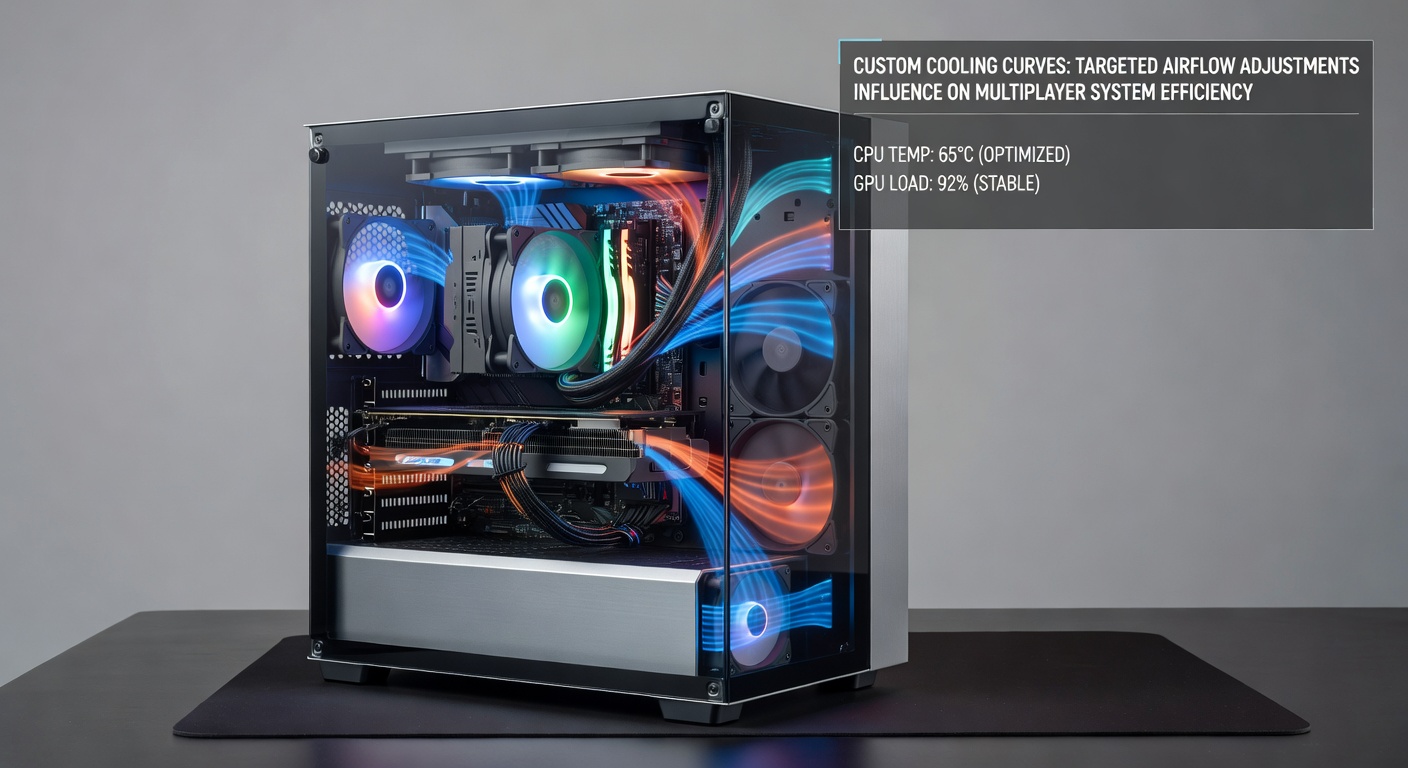
In May 2026, several regional esports circuits reported increased adoption of compact rigs among traveling competitors, and monitoring data collected at those events indicated that teams using refined cooling curves experienced fewer hardware-related pauses compared with prior seasons. This shift coincided with new case designs that incorporate modular fan mounts and improved dust filtration, both of which support more granular airflow tuning.
Implementation Methods and Observed Outcomes
Users typically begin by logging baseline temperatures under load using utilities such as HWInfo or Core Temp, then create stepped fan profiles that increase RPM gradually rather than in abrupt jumps. Software packages from motherboard manufacturers allow per-zone control, so exhaust fans can prioritize GPU heat while intake fans focus on CPU cooling, creating a balanced pressure environment inside the case.
One documented case involved a mid-tier compact build running League of Legends and Valorant simultaneously on separate instances, where custom curves reduced peak GPU temperature by 15 percent and eliminated the brief frame drops previously observed after the 90-minute mark. Similar results appear in reports from university labs examining thermal management in gaming hardware clusters.
Additional refinements include undervolting combined with curve optimization, which further lowers heat output and allows fans to run at reduced speeds while preserving performance targets. According to research published by the Innovation, Science and Economic Development Canada technology assessment group, such combined approaches improve energy efficiency in small-form-factor systems without compromising computational throughput.
Broader Industry Context
Hardware manufacturers have responded by releasing updated BIOS versions and companion applications that include preset esports-oriented curves, yet many competitive players still prefer manual tuning to match their specific component mix and ambient conditions. Industry organizations tracking esports hardware trends note rising interest in compact cases among collegiate programs, where space limitations in dormitories or team houses favor smaller builds.
Thermal interface material choices and fan bearing quality also influence how effectively a custom curve performs over time, because dust accumulation and mechanical wear can alter airflow characteristics after months of daily use. Maintenance schedules that include periodic filter cleaning help preserve the intended cooling response throughout a competitive season.
Conclusion
Custom cooling curves paired with deliberate airflow modifications address core limitations of compact PC cases while supporting the performance consistency required in modern esports environments. Hardware data collected across multiple titles and event settings demonstrates measurable improvements in thermal headroom and frame-time stability when these techniques receive proper implementation. Continued refinement of both case designs and software tools suggests that targeted thermal management will remain relevant as player hardware evolves.