DirectStorage Transforms Asset Loading Dynamics in PC Games
Written by Petra Carter · Aug 25, 2026
DirectStorage Transforms Asset Loading Dynamics in PC Games
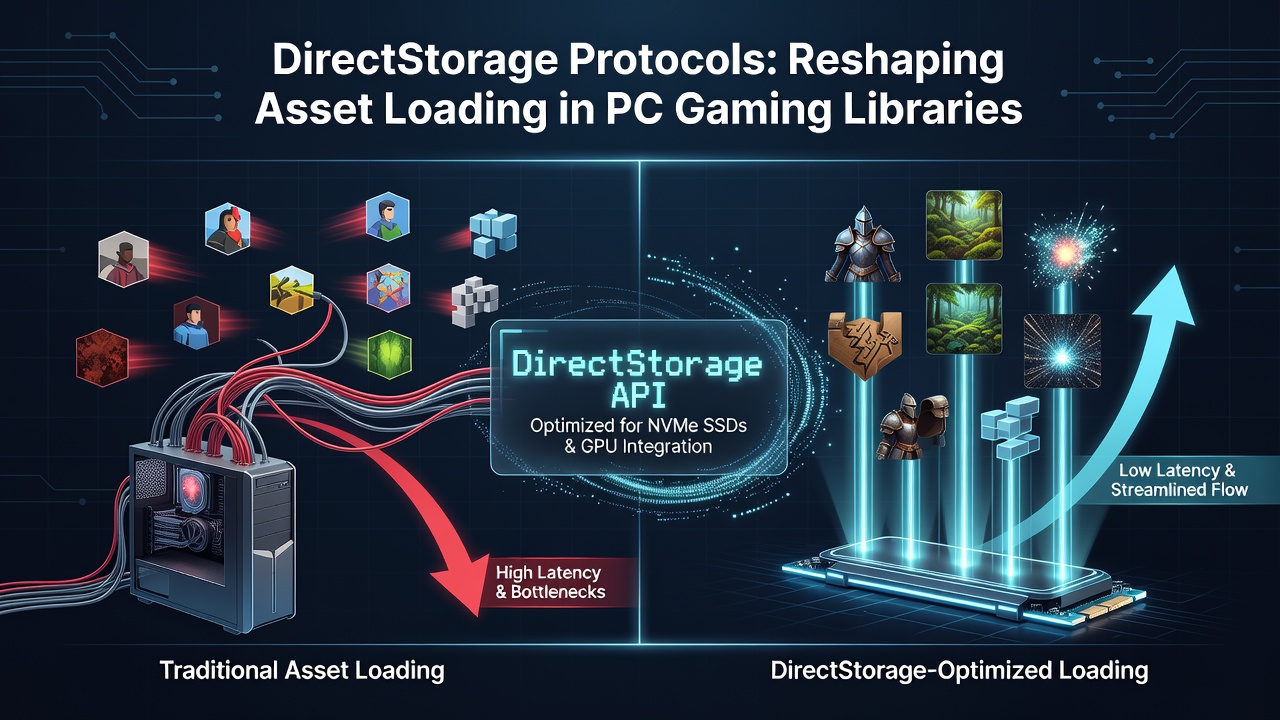
DirectStorage protocols allow GPUs to pull data straight from NVMe drives without routing everything through the CPU, and this setup has altered how developers structure asset streaming in dozens of PC titles since its wider rollout. Game engines now handle decompression tasks on the graphics hardware itself, which cuts down on traditional bottlenecks that once forced lengthy preload sequences before players entered new areas. Data from multiple engine updates shows reduced wait times across open-world environments where assets stream continuously during gameplay.
Core Mechanics Behind the Protocol Shift
Traditional loading relied on the CPU to manage file reads and decompression before passing assets onward, yet DirectStorage bypasses much of that path through its API extensions built on Microsoft’s storage stack. The GPU issues commands directly to the drive controller, and this change means developers can design pipelines that keep more assets compressed until the exact moment they appear on screen. Research indicates that games adopting these calls often see load times drop by factors reported in engine benchmarks from 2024 onward, with patterns emerging where smaller texture sets load on demand rather than all at once.
Engine teams working with Unreal and Unity variants have adjusted their asset management layers accordingly, and observers note that libraries of games now incorporate streaming volumes that adjust based on player movement speed and view distance. This approach avoids the older method of dumping entire regions into memory ahead of time, which previously limited how dense environments could become without extended pauses.
Patterns Emerging Across Game Collections
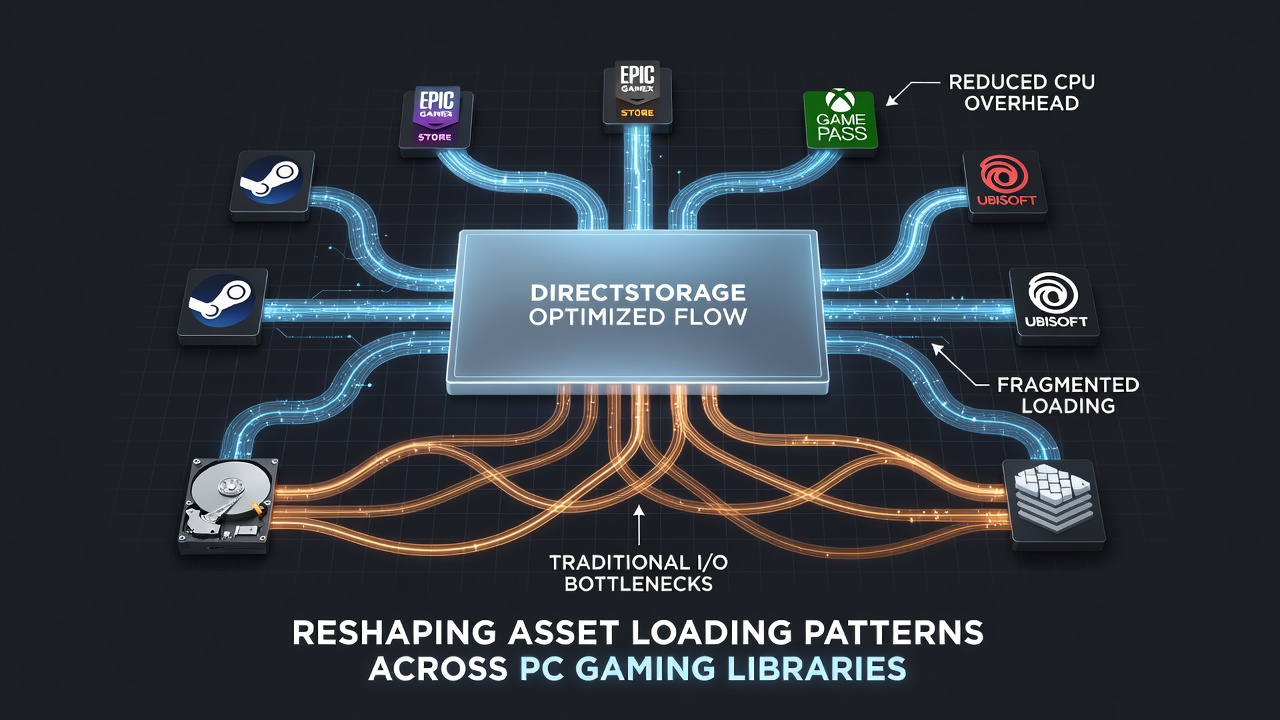
Asset loading patterns have evolved toward finer granularity in titles released through 2025 and into 2026, where developers segment models and textures into smaller chunks that arrive precisely when needed. In collections spanning action-adventure and simulation genres, this results in fewer visible pop-ins during rapid camera movements because the protocol supports parallel reads that the GPU schedules itself. Figures from hardware monitoring tools reveal higher sustained drive throughput during these sessions compared with pre-DirectStorage builds.
One case involved a major RPG series that restructured its world streaming system after integrating the protocol, allowing seamless transitions between interior and exterior zones without the multi-second halts common in earlier entries. Similar adjustments appear in racing libraries where trackside details load progressively as vehicles approach, and data shows these changes maintain frame consistency even on systems wth varying drive speeds.
Hardware and Software Ecosystem Adjustments
Adoption requires compatible storage devices and updated drivers, yet by August 2026 most new gaming PCs ship with NVMe drives that meet the necessary queue depth specifications for full protocol use. Developers have responded by embedding fallback paths for older hardware while prioritizing the direct path in current releases, and this dual approach appears across multiple publisher libraries. Industry reports from sources such as the Interactive Software Federation of Europe document rising integration rates in European-developed titles during this period.
Graphics vendors have also aligned their drivers to expose the necessary extensions, which enables consistent behavior across AMD, NVIDIA, and Intel platforms. Those tracking performance metrics observe that the protocol shines brightest in scenarios with high texture resolution and frequent asset swaps, patterns typical in modern multiplayer environments where maps load dynamically for each session.
Future Library Evolution and Standardization
Standardization efforts continue through working groups tied to storage and graphics APIs, and this work points toward broader support in console ports that share PC codebases. Academic analyses from institutions including the Delft University of Technology have examined how these protocols influence memory allocation strategies in large-scale game collections, revealing shifts toward just-in-time decompression that reduce peak RAM usage in several tested engines.
Collections of legacy titles see occasional updates that introduce optional DirectStorage paths when remastered, though original builds remain unchanged. The overall effect across PC gaming libraries centers on more flexible data access that supports denser worlds without proportional increases in loading infrastructure.
Conclusion
DirectStorage has introduced measurable changes to asset loading patterns by enabling direct GPU-to-storage communication, and developers continue adapting their pipelines to leverage these capabilities. The result shows in streamlined streaming systems that appear across growing numbers of PC titles, supported by hardware trends and ongoing API refinements through 2026.