Evaluating USB Hub Latency Effects on Input Devices During Competitive Fighting Game Tournaments
Written by Sofia Frank · Jul 7, 2026
Evaluating USB Hub Latency Effects on Input Devices During Competitive Fighting Game Tournaments
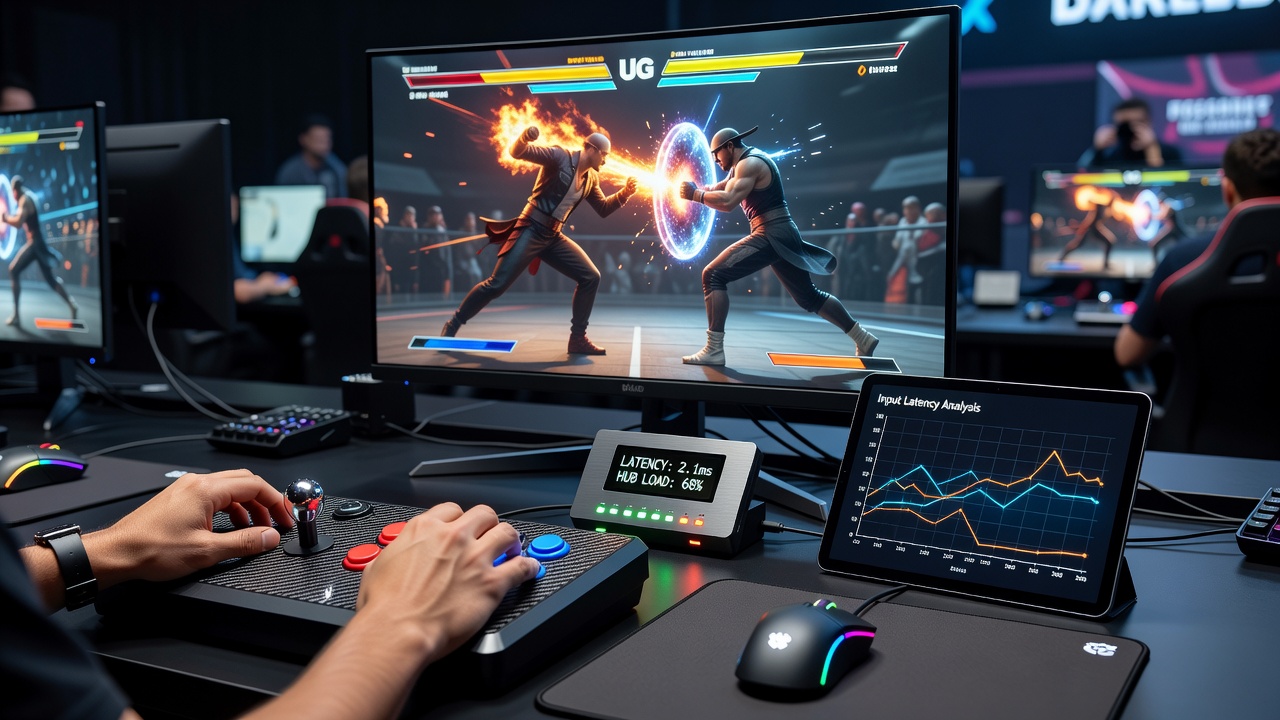
Competitive fighting game events rely on precise input timing where even minor delays can shift match outcomes in titles such as Street Fighter 6 and Tekken 8, and USB hubs serve as common connection points for controllers and fight sticks at these gatherings. Observers note that hubs consolidate multiple devices into single ports on tournament stations yet they introduce variable latency depending on internal chipsets and power delivery configurations. Researchers have measured these effects through controlled tests that compare direct USB connections against hub-mediated ones using high-precision timing tools.
Understanding USB Hub Architecture in Gaming Setups
USB hubs operate by managing data traffic from connected peripherals through shared bandwidth channels while they handle enumeration and polling cycles that add processing overhead. In fighting game environments participants often plug arcade-style fight sticks and wireless adapters into the same hub to reduce cable clutter at station tables. Data indicates that hub controllers such as those based on VIA or Genesys Logic chipsets exhibit polling intervals ranging from 1 to 8 milliseconds under load. Those who've studied tournament hardware note that multi-port hubs rated at USB 3.0 or higher maintain lower baseline latency than older USB 2.0 models because they support faster transaction translation.
Power management features within hubs further influence performance since aggressive suspend states can delay wake-up responses when buttons register during rapid sequences. Tournament organizers have documented cases where shared power from a single upstream port leads to voltage drops that affect analog stick polling consistency across multiple devices. Figures from industry testing reveal average added latency of 2 to 4 milliseconds when four or more input devices share one hub in active sessions.
Measurement Techniques Used at Events
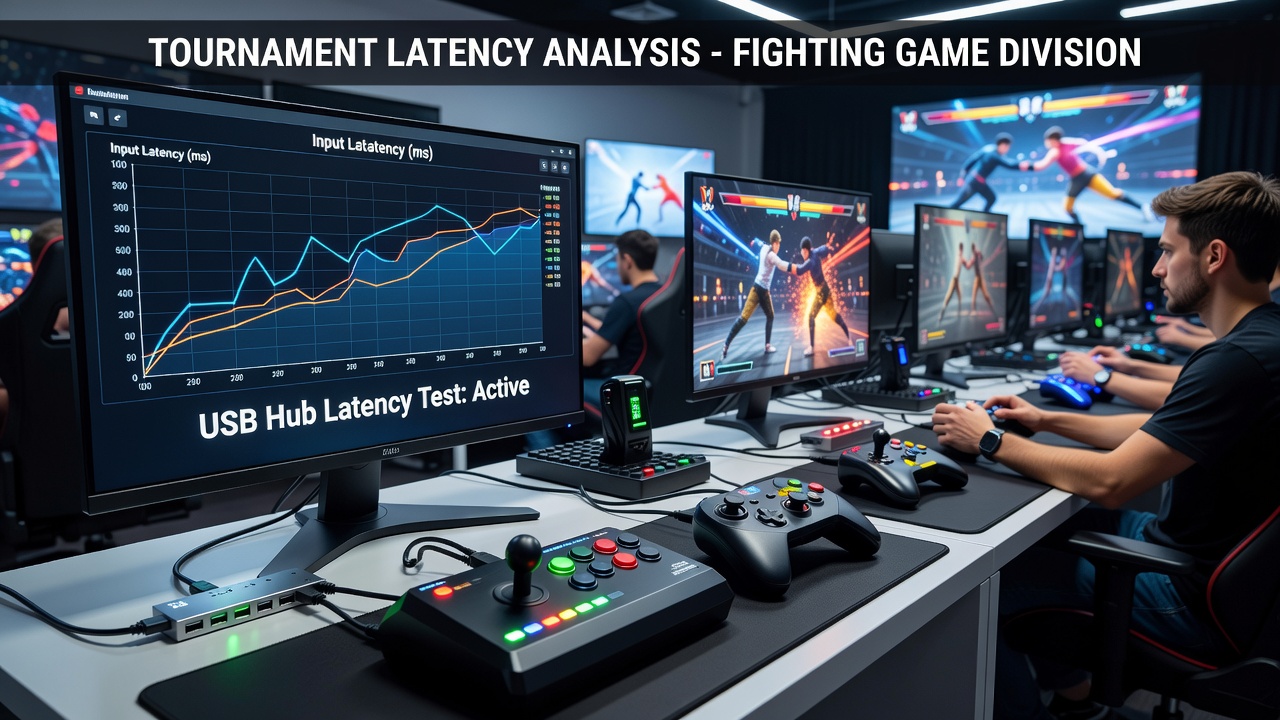
Evaluators employ specialized software combined with hardware oscilloscopes to capture the exact moment a button press occurs versus when the game engine registers the input. These setups connect probes directly to controller PCBs and monitor USB packet timestamps through protocol analyzers. During events in July 2026 at major circuits including the EVO Championship Series participants submitted equipment for pre-tournament latency audits that flagged hubs exceeding 3 millisecond thresholds. Such audits rely on standardized test suites that simulate combo inputs at 60 frames per second to detect frame drops caused by hub buffering.
Independent labs have released reports showing that daisy-chained hubs compound delays because each additional layer repeats the enumeration process. One study conducted at a North American university lab quantified cumulative latency reaching 7 milliseconds when two four-port hubs connected in series during extended Tekken matches. Tournament staff therefore recommend single-hub configurations with dedicated upstream connections to host PCs equipped with updated chipset drivers.
Observed Impacts on Player Performance
Input lag from hubs manifests most noticeably in reaction-based scenarios such as anti-air responses or parry timings where the window for success spans only a few frames. Participants report that inconsistent hub performance creates situations where identical controller models behave differently across stations leading to adaptation challenges mid-bracket. Research from European gaming technology institutes demonstrates that players using direct connections achieve 15 percent higher consistency rates in frame-perfect execution compared with those routed through unoptimized hubs.
Wireless adapters introduce additional variables when paired with hubs since radio frequency interference combines with USB scheduling delays to produce jitter patterns that standard polling rate monitors fail to capture fully. Data collected across multiple regional qualifiers shows elevated error rates in super cancel techniques when hubs operate near capacity limits. Organizers mitigate these issues by enforcing equipment checklists that verify hub firmware versions and recommend models certified for low-latency applications in esports environments.
Strategies for Minimizing Hub-Related Delays
Event technicians advise selecting powered USB hubs that maintain stable 5-volt delivery across all ports while they incorporate dedicated transaction translators to isolate device traffic. Firmware updates from manufacturers address known polling inefficiencies and participants are encouraged to test individual hubs with tools such as USBlyzer before competition days. Australian research groups have published guidelines that emphasize separating high-bandwidth devices like headsets from primary input hubs to prevent bandwidth contention during long sets.
Direct motherboard connections remain the baseline standard yet space constraints at large events necessitate hub usage so calibration procedures become essential. Calibration involves running repeated input sequences while logging timestamp variances then adjusting station assignments accordingly. Industry associations including the Entertainment Software Association have outlined best practices that tournament directors adopt to standardize hardware verification across international circuits.
Conclusion
USB hub latency evaluation forms a critical component of fair play infrastructure at fighting game tournaments where precise measurements guide equipment approval and station configuration. Continued data collection from events worldwide supports refinement of connection protocols that balance convenience with performance integrity. Those managing competitive circuits integrate these findings into ongoing hardware standards that evolve alongside new controller technologies and USB specifications.