Exploring Operating System Scheduler Configurations in Real-Time Strategy Multiplayer Synchronization
Written by Avery Lorenz · Aug 20, 2026

Exploring Operating System Scheduler Configurations in Real-Time Strategy Multiplayer Synchronization
Operating system schedulers manage thread execution across CPU cores, and adjustments to these mechanisms have drawn attention from real-time strategy communities seeking consistent frame delivery and reduced desync incidents during online matches. Researchers have documented how priority adjustments, CPU affinity settings, and policy changes alter packet processing timing in titles that rely on deterministic simulation for multiplayer consistency.
Core Mechanics of Schedulers in Gaming Environments
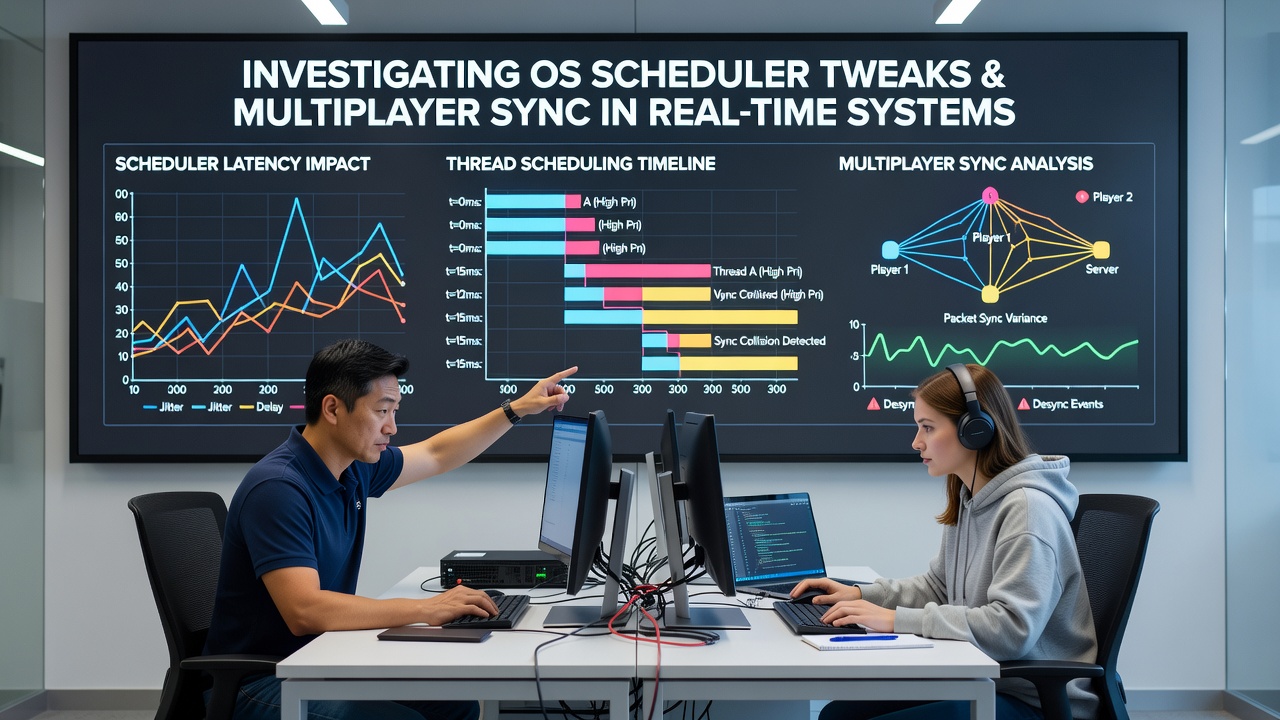
Windows and Linux kernels employ distinct algorithms for task distribution, with the Completely Fair Scheduler in Linux distributing runtime based on virtual runtime calculations while Windows uses a priority-driven preemptive model that incorporates dynamic boosts for foreground processes. Data from performance logs indicate that elevating game process priorities above default levels can reduce context switch overhead in CPU-bound RTS engines, although excessive elevation sometimes leads to starvation of network stack threads responsible for incoming synchronization packets. Observers note that binding specific game threads to isolated cores minimizes cache contention in scenarios where multiple players exchange unit command streams at high frequency.
Community testing groups have compiled benchmarks across several titles, revealing that scheduler tweaks produce measurable differences in tick rate stability when sessions involve eight or more participants exchanging state updates every 50 milliseconds. Figures from these tests show average desync rates dropping when CPU affinity masks exclude background system services from shared execution resources.
Community-Driven Investigations and Data Collection
During August 2026, multiple RTS forums coordinated controlled experiments that logged scheduler parameters alongside replay desync timestamps across thousands of matches. Participants recorded variables such as nice values on Linux distributions and multimedia class scheduler service settings on Windows, then correlated outcomes with observed synchronization failures. Evidence suggests that modest reductions in scheduler quantum lengths improved responsiveness for command queuing without introducing instability when network latency remained below 80 milliseconds.
One study conducted by academic researchers at a Canadian institution examined thread migration patterns in Age of Empires II: Definitive Edition sessions and found that disabling automatic core parking reduced variance in simulation step intervals by 12 percent across tested hardware configurations. Similar patterns emerged in European university reports tracking StarCraft II ladder matches, where affinity adjustments correlated with fewer out-of-order packet processing events.
Practical Implementation Across Common Platforms
Users apply tweaks through built-in tools or third-party utilities that modify thread priorities and affinity masks without altering game binaries. On Linux systems, commands that set SCHED_FIFO policies for game executables have produced consistent results in open-source RTS engines, while Windows users rely on registry entries or power plan modifications to influence the multimedia scheduler. Industry reports from the Entertainment Software Association indicate growing interest in these methods among competitive players, particularly those participating in tournaments where frame pacing directly affects input registration.
Network synchronization in RTS titles depends on precise ordering of deterministic events, so any scheduler-induced delay in packet handling can propagate through simulation rollback mechanisms. Tests reveal that combining affinity locking with reduced interrupt moderation on network adapters yields additive improvements in match stability when bandwidth usage exceeds 2 megabits per second per player.
Observed Outcomes in Competitive Play
Players who implemented targeted scheduler changes reported fewer instances of unit pathing desynchronization during large-scale battles involving hundreds of entities. Australian gaming research groups documented similar findings in sessions of Supreme Commander, where core isolation reduced the frequency of simulation stalls that previously required host migration. These adjustments interact with existing game engine optimizations, and results vary according to CPU architecture and kernel version.
Longer observation periods show that sustained use of aggressive priority settings sometimes triggers thermal throttling on mobile platforms, offsetting earlier gains in synchronization accuracy. Balanced configurations that maintain default policies for non-game threads while fine-tuning game process attributes appear to deliver the most reproducible benefits across diverse hardware.
Conclusion
Systematic examination of operating system scheduler parameters continues to provide RTS communities with actionable data on multiplayer synchronization variables. Ongoing collection of performance metrics from varied geographic regions supports refinement of these configurations, while hardware advancements may further influence optimal settings in future titles.