Exploring Power Delivery Networks in Overclocked Systems for Consistent Frame Delivery During Extended Strategy Simulations
Written by Petra Franke · May 31, 2026
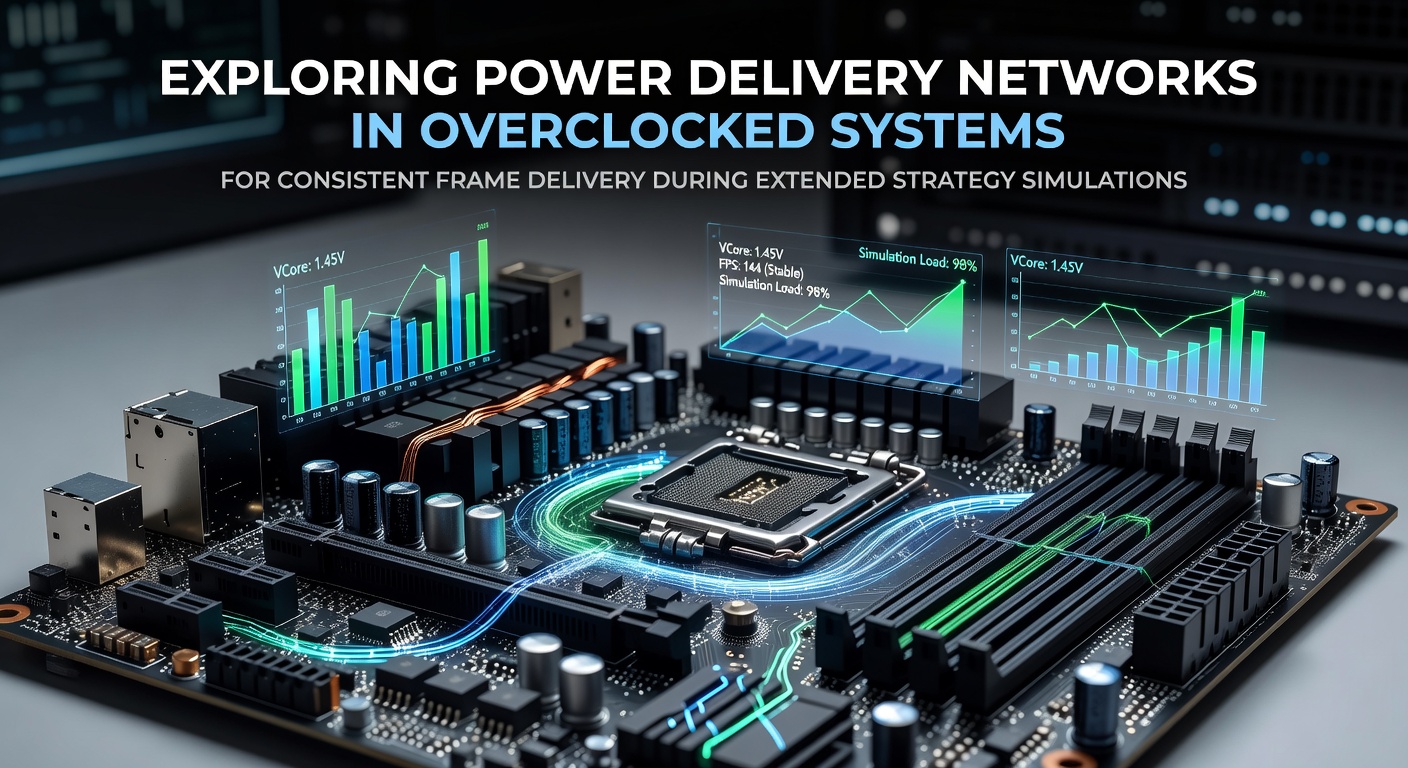
Exploring Power Delivery Networks in Overclocked Systems for Consistent Frame Delivery During Extended Strategy Simulations
Power delivery networks form the backbone of stable performance in high-end computing setups where overclocking meets prolonged computational demands, and they play a direct role in maintaining consistent frame timing during extended strategy simulations that run for hours on end. These networks encompass voltage regulator modules, power phases, capacitors, and traces that channel electricity from the power supply unit to the CPU and GPU, ensuring that voltage remains steady even as clock speeds push beyond stock specifications. When systems operate under sustained loads from games like large-scale turn-based campaigns or real-time strategy titles with massive unit counts, fluctuations in power can lead to micro-stutters that disrupt frame delivery patterns.
Core Components of Modern Power Delivery Networks
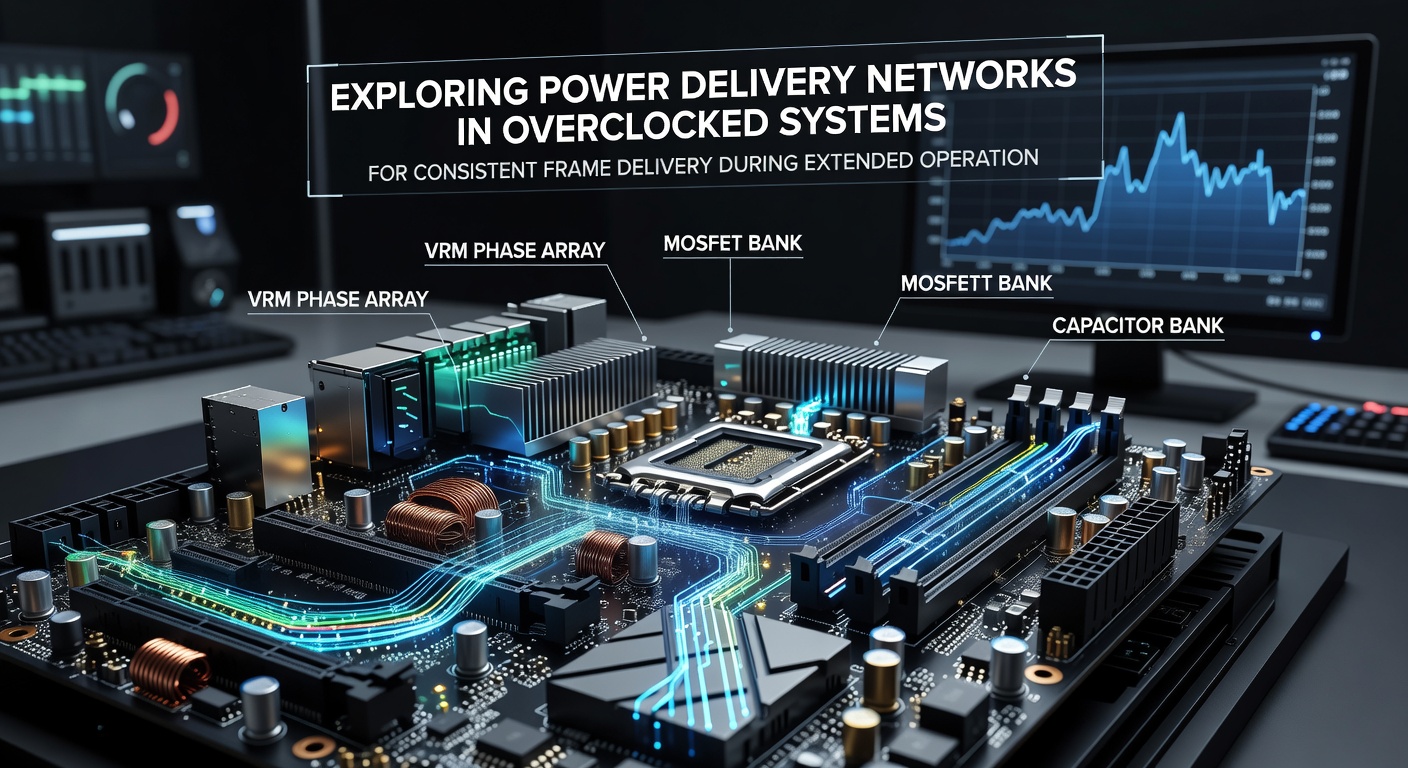
Engineers design voltage regulator modules with multiple phases to distribute current evenly, and each phase typically includes MOSFETs paired with inductors that smooth out the power waveform before it reaches sensitive silicon. Data from industry benchmarks shows that motherboards equipped with 16 or more phases handle transient spikes more effectively than those with fewer stages, particularly when processors run at elevated voltages during overclocking sessions. Capacitor quality matters equally because low-ESR components reduce ripple that otherwise introduces timing inconsistencies in frame output over long simulation periods. Observers note that systems built around robust phase designs exhibit tighter frame time variance when tested across multi-hour workloads compared to configurations relying on basic layouts.
Effects of Overclocking on Power Stability
Overclocking increases clock multipliers and voltages, which raises overall power draw and generates additional heat that stresses every element in the delivery chain. Research indicates that a 20 percent voltage increase can double current requirements in certain CPU architectures, forcing VRMs to work harder while maintaining regulation within tight tolerances. Those who've measured these setups find that inadequate cooling on power components leads to thermal throttling mid-session, which directly impacts frame pacing during critical moments in extended strategy runs. Yet proper heatsinks and fan curves keep temperatures in check, allowing sustained operation without voltage droop that would otherwise cause frame delivery interruptions.
Frame Delivery Demands in Prolonged Simulations
Strategy simulations often involve thousands of AI calculations per tick alongside graphical rendering, creating combined loads that fluctuate rapidly between CPU-bound and GPU-bound states. Consistent frame delivery requires power delivery networks to respond instantly to these shifts without allowing voltage to sag below operational thresholds. Figures from hardware monitoring tools reveal that even brief dips of 50 millivolts can produce noticeable hitches when frame times stretch beyond 16 milliseconds in 60 FPS targets. Systems tuned for overclock stability therefore incorporate additional decoupling capacitors near the processor socket to absorb these transients and preserve smooth output throughout marathon sessions.
Testing Methodologies and Data Patterns
Engineers employ oscilloscopes and frame capture software to quantify how power network performance translates into frame timing metrics, and they run standardized workloads that mimic real strategy campaign lengths. One study revealed that configurations with enhanced power phases maintained sub-1 percent frame time deviation across eight-hour tests, whereas baseline boards showed spikes exceeding 5 percent after the four-hour mark. In May 2026, additional datasets from collaborative academic and industry efforts further mapped these relationships across newer chipset platforms, confirming that phase count and capacitor specifications remain primary variables in long-duration consistency. People who've examined these records observe that overclocked systems benefit most when power delivery is scaled proportionally to the increased TDP rather than relying solely on aggressive voltage offsets.
Integration with Cooling and Component Selection
Effective power networks work in tandem with targeted cooling solutions that prevent thermal buildup around VRMs and memory modules during extended operation. Active airflow directed at MOSFET arrays keeps component resistance low, which preserves voltage accuracy under continuous load. Builders often pair high-phase motherboards with premium thermal pads and auxiliary fans, and measurements confirm these combinations reduce peak VRM temperatures by 15 to 20 degrees Celsius compared to stock cooling. Such reductions translate directly into fewer power-related interruptions during simulations that push both processor and graphics hardware simultaneously.
Conclusion
Power delivery networks determine whether overclocked systems can sustain the precise voltage and current levels needed for uninterrupted frame delivery across lengthy strategy simulations. Component specifications, phase architecture, and thermal management all contribute measurable effects that testing protocols now quantify with increasing precision. As hardware evolves, these relationships continue to guide configuration choices that prioritize stability under prolonged computational stress.