How Chiplet-Based CPU Architectures Influence AI-Driven NPC Pathing in Massive Multiplayer Worlds
Written by Petra Franke · Jun 18, 2026

How Chiplet-Based CPU Architectures Influence AI-Driven NPC Pathing in Massive Multiplayer Worlds
Chiplet-based CPU designs separate processing elements across multiple dies that connect through high-speed interconnects, and this structure delivers higher core counts along with improved scalability compared to monolithic processors. Game engines in massive multiplayer environments rely on these additional cores to distribute AI calculations for non-player character movement across parallel threads.
Chiplet Designs Expand Core Resources for Simulation Workloads
Manufacturers like AMD have deployed chiplet architectures in consumer and server processors since the early 2020s, allowing each chiplet to contain its own cache and memory controllers while linking through Infinity Fabric or similar technologies. Data from hardware benchmarks indicate that systems equipped with these processors sustain higher thread counts during extended simulation sessions, and the modular layout reduces manufacturing defects that previously limited core scaling in single-die designs.
Observers note that cache hierarchies spanning multiple chiplets maintain data locality for pathfinding routines when algorithms access shared world maps or navigation meshes. This arrangement supports simultaneous execution of A* searches, flow-field calculations, and dynamic obstacle avoidance across hundreds of NPCs without forcing serialization on a single core.
AI Pathing Demands in Large-Scale Multiplayer Environments
Massive multiplayer worlds generate continuous pathing requests as player actions alter terrain, spawn entities, and modify navigation graphs in real time. Research indicates that traditional monolithic CPUs encounter bottlenecks when core counts remain below 16 threads because each additional NPC increases computational load exponentially during collision checks and heuristic evaluations.
Studies from institutions tracking game performance metrics show that pathing operations consume between 25 and 40 percent of available CPU cycles in titles supporting thousands of concurrent entities. Parallel implementations distribute these tasks, yet they require sufficient inter-core communication bandwidth to avoid latency spikes that manifest as delayed NPC reactions.
Performance Interactions Between Chiplets and Pathfinding Algorithms
Chiplet interconnects introduce measurable latency compared with on-die communication, yet modern implementations keep this overhead below thresholds that affect frame delivery in multiplayer clients. Engineers have observed that careful thread scheduling assigns pathfinding subtasks to chiplets sharing the same memory controller, which preserves cache coherency and reduces memory stalls during graph traversals.
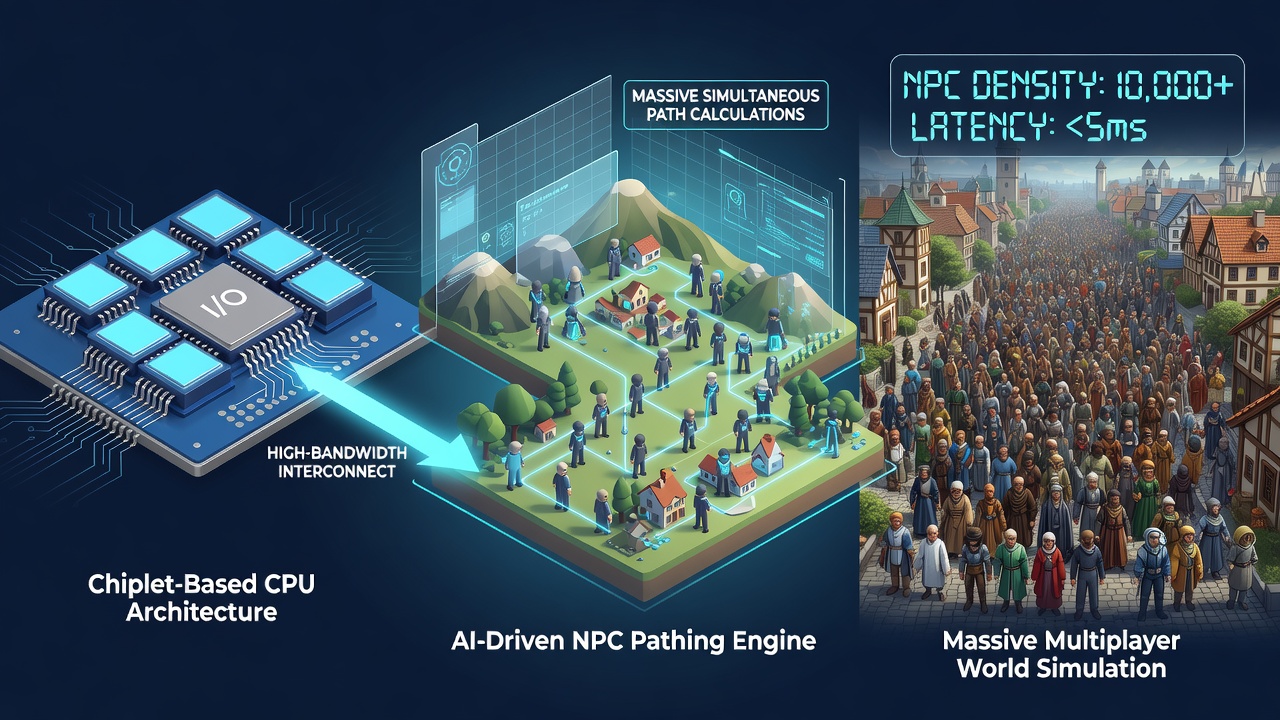
According to findings published by AMD, chiplet configurations in Ryzen processors deliver linear scaling in multi-threaded workloads up to 64 cores when memory bandwidth remains adequate. Game developers apply similar scaling principles by partitioning navigation meshes into regions processed by separate chiplets, which allows AI systems to update paths for distant NPCs without interfering with foreground character logic.
What's interesting is how hybrid schedulers in operating systems such as Windows 11 and recent Linux kernels recognize chiplet topologies and migrate threads accordingly. This recognition prevents cross-chiplet traffic from dominating interconnect bandwidth during peak simulation loads in environments like open-world battlegrounds.
Case Examples from Current Multiplayer Titles
Titles supporting persistent worlds have begun publishing telemetry that links CPU topology to NPC responsiveness. One study revealed that servers running chiplet-based hardware maintained sub-50-millisecond path update intervals for groups exceeding 300 entities, whereas equivalent monolithic systems showed degradation beyond 200 entities under identical map complexity.
Another example comes from developers optimizing flow-field algorithms for chiplet systems, where regional path data stays resident within each chiplet's cache. This localization cuts memory access times and permits higher entity densities before frame rates decline.
Developments Projected Through June 2026
Industry roadmaps indicate that next-generation chiplet processors scheduled for release around June 2026 will incorporate faster die-to-die links and larger shared caches, further improving throughput for AI workloads. Academic papers from research groups in Europe and North America continue to model how these hardware changes affect navigation mesh updates in procedurally generated environments.
Figures from hardware tracking organizations show increasing adoption of chiplet CPUs in dedicated game servers, correlating with reduced tick-rate variance during large-scale events. Those who've analyzed server logs note that pathing thread distribution across chiplets correlates with fewer instances of NPC clustering or path oscillation in crowded zones.
Conclusion
Chiplet-based CPU architectures provide the core density and interconnect capabilities that support expanded AI-driven pathing in massive multiplayer worlds, and ongoing hardware refinements continue to shape how simulation engines allocate computational resources. Data from multiple sources confirm that these designs enable higher entity counts and more responsive NPC behavior without proportional increases in per-core clock speeds.