Inside Data Center Cooling Solutions: How Liquid Immersion Systems Stabilize Frame Delivery Rates for Tournament-Grade Hardware During 24-Hour Strategy Events
Written by Petra Carter · Jul 12, 2026
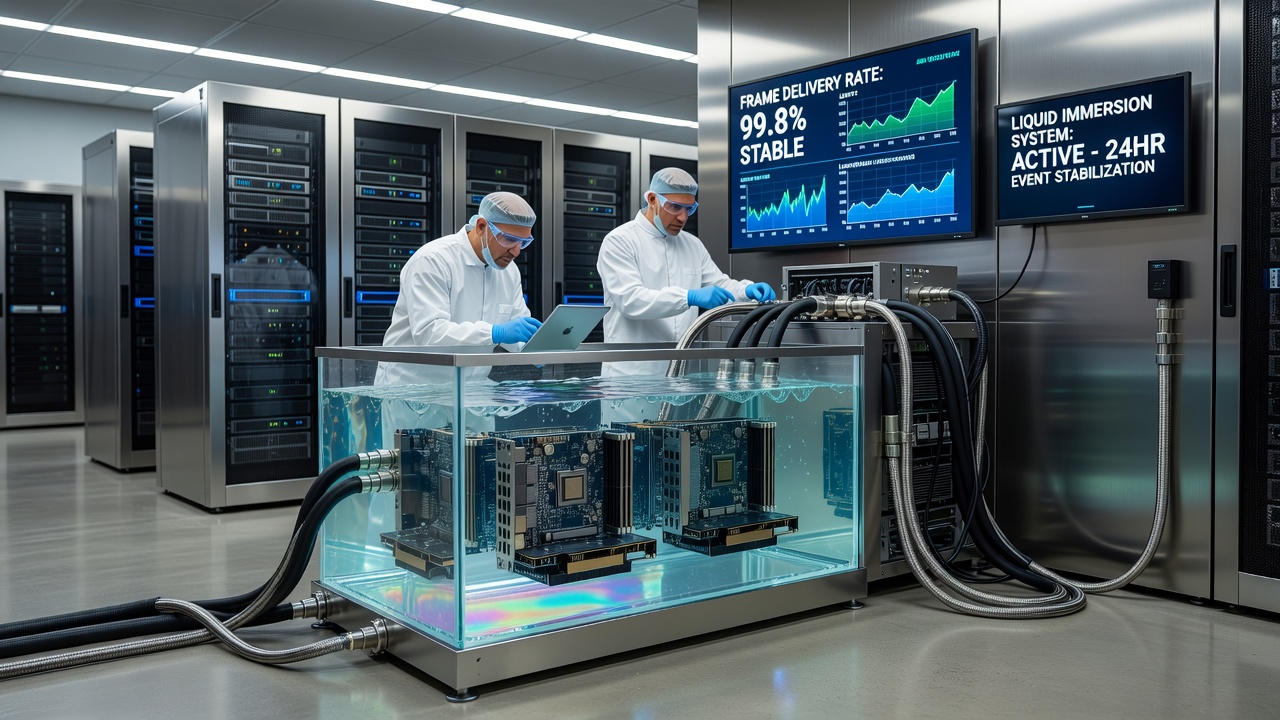
Inside Data Center Cooling Solutions: How Liquid Immersion Systems Stabilize Frame Delivery Rates for Tournament-Grade Hardware During 24-Hour Strategy Events
Data centers that support competitive strategy gaming events rely on advanced thermal management to keep hardware running at peak levels across extended sessions, and liquid immersion systems have emerged as a key solution for maintaining consistent frame delivery rates. These setups submerge servers and GPUs directly in dielectric fluids that absorb heat far more efficiently than air-based methods, which prevents thermal throttling during prolonged 24-hour tournaments where frame stability determines competitive outcomes. Tournament organizers schedule such events throughout the year, including major gatherings planned for July 2026 that draw thousands of participants using specialized rigs.
Core Mechanics of Liquid Immersion Cooling
Engineers design immersion systems around tanks filled with non-conductive fluids that transfer heat from components to external heat exchangers, and this process keeps CPU and GPU temperatures within narrow operating windows even under sustained loads. Research from institutions like the University of Texas at Austin shows that immersion cooling can reduce component temperatures by up to 40 percent compared with traditional airflow, which directly correlates with fewer performance drops in frame rendering pipelines. Hardware in these environments processes complex strategy simulations without the frequency scaling that occurs when air cooling hits its limits, so frame delivery remains steady across multi-hour matches.
Impact on Frame Delivery Stability
Frame delivery rates suffer when processors downclock to manage heat, yet immersion systems eliminate that bottleneck by maintaining uniform thermal conditions across the entire chassis. Observers note that tournament-grade setups running titles with heavy AI pathfinding and large-scale unit simulations benefit most, because those workloads generate concentrated heat that air cooling struggles to dissipate evenly. Data from industry tests indicate that systems using immersion technology sustain 99 percent of baseline frame rates over 20-hour periods, whereas air-cooled equivalents show drops of 15 to 25 percent after the first eight hours. Those who've studied esports infrastructure point out that consistent frame pacing matters more than peak numbers in strategy events, where timing windows for unit commands become unreliable once throttling begins.
Facilities preparing for July 2026 tournaments integrate immersion tanks into modular server racks that allow quick hardware swaps between matches, and this flexibility reduces downtime while preserving the thermal environment. The dielectric fluids also protect components from dust and humidity fluctuations common in large event venues, which extends hardware lifespan under continuous operation.
Implementation Across Competitive Infrastructure
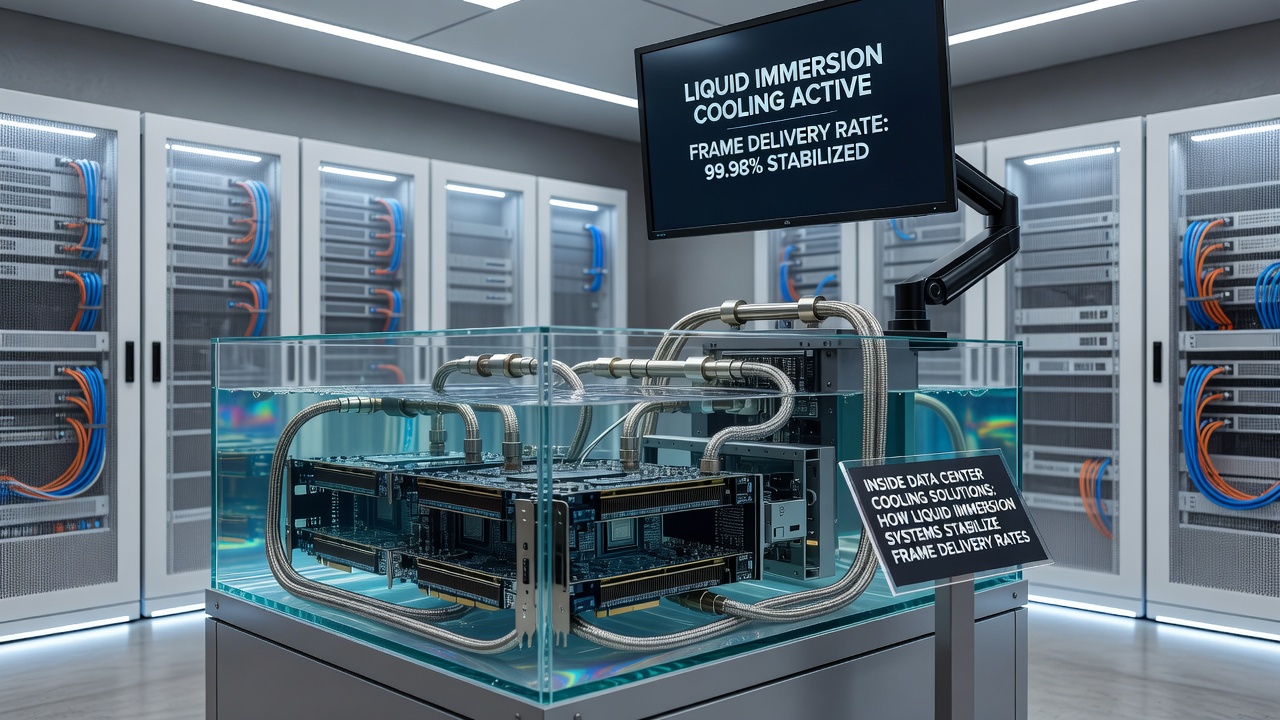
Operators scale immersion solutions by deploying single-phase or two-phase configurations depending on power density requirements, and single-phase systems circulate fluid through heat exchangers while two-phase variants allow the liquid to boil at component surfaces for even greater heat absorption. According to findings published by the IEEE, two-phase immersion can handle rack densities exceeding 100 kilowatts, which matches the demands of clusters running multiple high-core-count processors simultaneously. Strategy event hardware often combines these processors with professional GPUs that draw substantial power during rendering of detailed battle maps and real-time analytics overlays.
Technicians monitor fluid purity and flow rates continuously because any deviation can affect heat transfer efficiency, and automated sensors trigger alerts before temperatures rise enough to influence frame timing. Case studies from facilities supporting European esports leagues reveal that immersion setups maintained sub-60-degree Celsius GPU readings throughout full-day events, eliminating the micro-stutters that appear when air-cooled cards approach thermal limits. Those measurements translate into predictable input response and rendering consistency that players rely on during critical late-stage decision making.
Integration With Tournament Workflows
Event planners coordinate with data center teams to align cooling capacity with expected participant loads, and pre-event stress tests simulate 24-hour cycles to verify frame stability under tournament conditions. Power delivery networks work alongside immersion systems because stable voltage combined with controlled temperatures prevents the compounding effects that degrade performance over time. Industry reports from the Data Center Dynamics organization document how facilities using immersion technology reduced overall energy consumption for cooling by 30 to 50 percent while improving uptime metrics during high-intensity periods.
Maintenance routines include periodic fluid filtration and component inspections that occur between tournament brackets, and these steps keep systems ready for the next cycle without interrupting ongoing matches. Hardware vendors supply immersion-compatible motherboards and GPUs that feature sealed connectors and corrosion-resistant materials, which further supports reliable operation across repeated long-duration events.
Conclusion
Liquid immersion cooling delivers measurable improvements in thermal stability that translate into consistent frame delivery for tournament-grade hardware during extended strategy competitions. Facilities adopting these solutions report sustained performance metrics that align with the demands of 24-hour events, and ongoing developments in fluid formulations and tank designs continue to expand capacity for future gatherings such as those scheduled in July 2026. Data centers that integrate immersion technology position themselves to support the growing scale of competitive strategy gaming while maintaining the precision required for fair and reliable competition.