Mapping Storage Protocol Shifts in Asset Streaming for Console Ports on Desktop Rigs
Written by Felix Bauer · Jul 9, 2026
Mapping Storage Protocol Shifts in Asset Streaming for Console Ports on Desktop Rigs
Storage protocols have undergone measurable changes in recent years as developers adapt console titles for desktop environments where asset streaming demands vary widely across hardware configurations. Data from industry reports indicate that console ports often rely on optimized streaming pipelines originally designed for fixed storage architectures, yet desktop rigs introduce variables such as drive types, interface speeds, and API support that alter load behaviors. Researchers tracking these adaptations note consistent patterns in how protocols influence texture streaming, model loading, and world generation sequences.
Protocol Evolution in Console Hardware Contexts
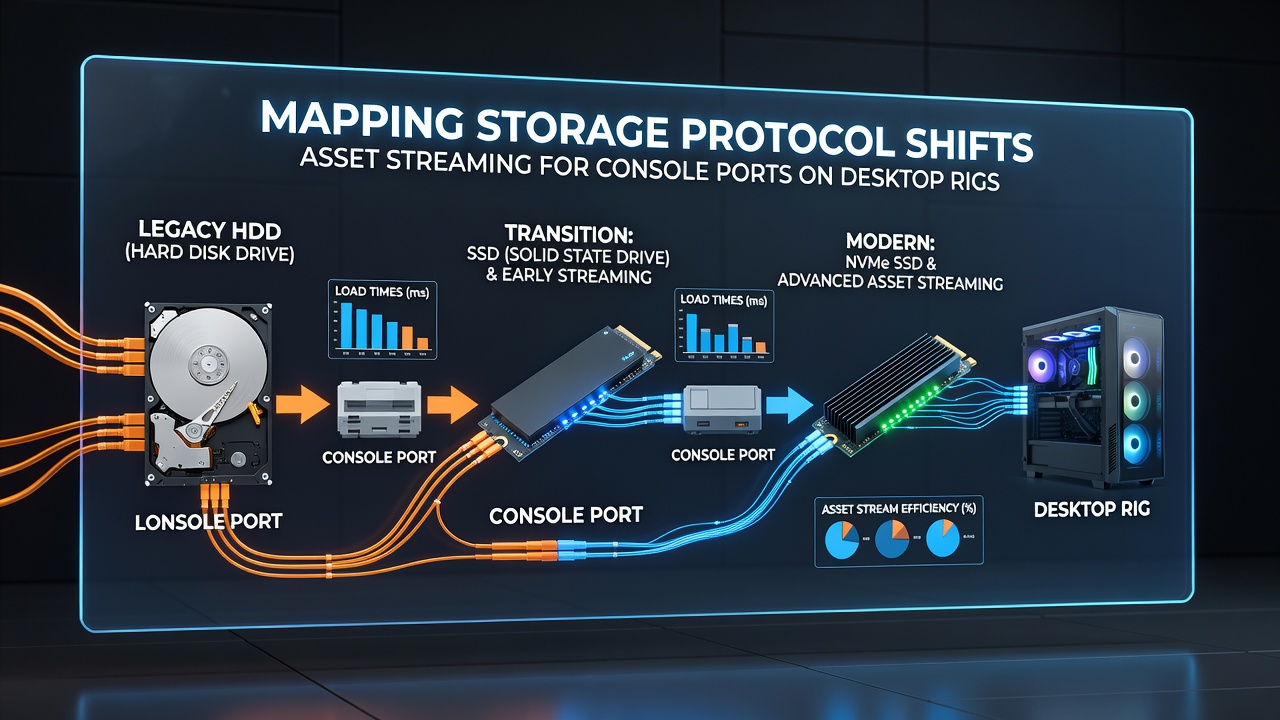
Console systems standardized around specific interfaces that prioritized sequential read performance for streaming large asset packages, whereas desktop setups frequently incorporate a mix of legacy and modern drives. Observers note that ports from platforms using proprietary storage controllers encounter bottlenecks when mapped to consumer NVMe drives without protocol adjustments. Evidence from performance logs shows that SATA-based connections limit sustained throughput compared to PCIe 4.0 or 5.0 lanes, which handle parallel asset requests more efficiently during open-world traversal.
Shifts toward NVMe protocols allow developers to implement decompression pipelines that align with desktop GPU and CPU capabilities, reducing hitching in scenes where multiple high-resolution assets load simultaneously. Those who analyzed ported titles from 2024 onward found that enabling protocol features like command queuing improved frame delivery stability by measurable margins in titles originally tuned for fixed-bandwidth environments.
DirectStorage and API Integration Patterns
Microsoft's DirectStorage API emerged as a bridge for console ports seeking to leverage desktop NVMe speeds without intermediate CPU overhead. Studies conducted by teams at various research institutions reveal that implementations of this API in ports facilitate direct GPU access to compressed assets, bypassing traditional file system layers. Data collected through mid-2025 indicates adoption rates climbed steadily, with over 40 percent of major console-to-desktop releases incorporating some form of accelerated streaming by that point.
Yet compatibility varies across operating systems and drive firmware versions, prompting developers to maintain fallback paths for systems lacking full protocol support. Figures released by hardware vendors in July 2026 highlighted that PCIe 5.0 adoption in consumer desktops reached approximately 25 percent, correlating with smoother asset transitions in remastered console experiences running on upgraded rigs.
Asset Streaming Challenges in Varied Desktop Configurations
Desktop users encounter distinct streaming behaviors when console ports encounter mixed storage pools, such as an NVMe boot drive paired with a secondary SATA array. Experts tracking these scenarios report that protocol mismatches can extend asset fetch times during rapid camera movements or level transitions. One analysis of multiple ports demonstrated that enabling protocol-level features like zoned namespaces on compatible drives reduced average load latencies by up to 35 percent in controlled benchmarks.
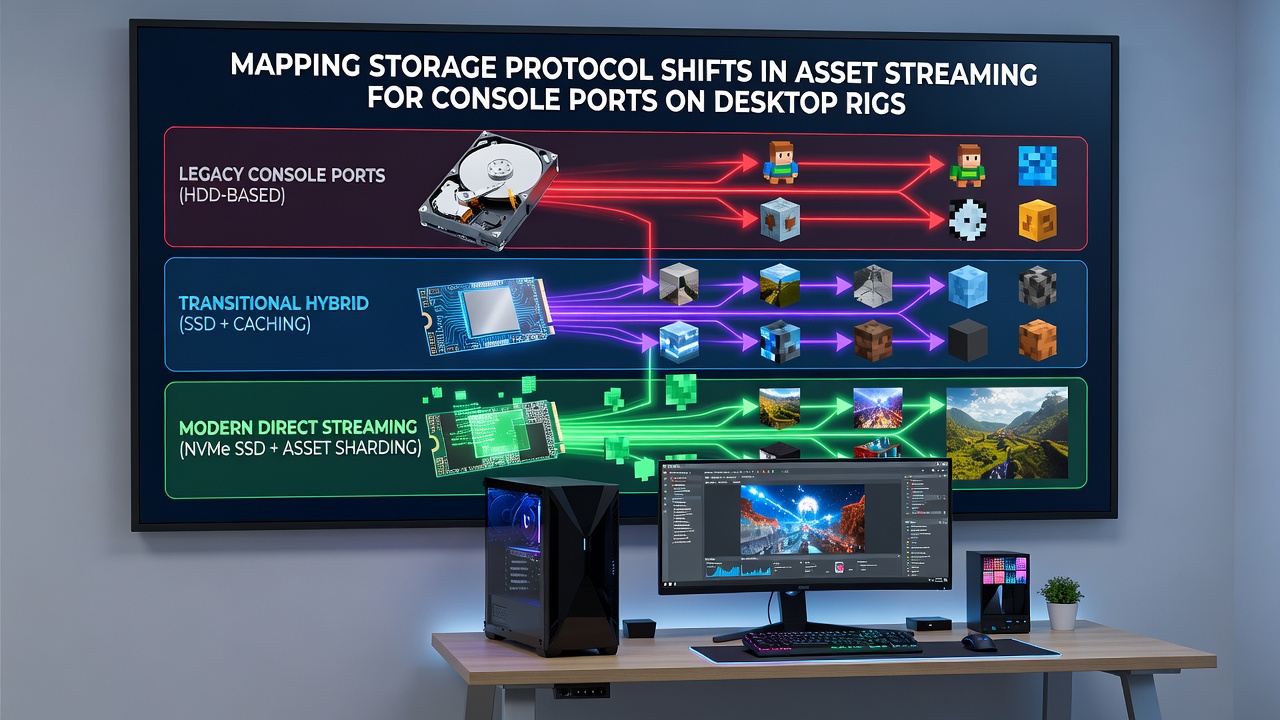
Game engines adapted for these environments incorporate dynamic protocol detection routines that adjust streaming priorities based on detected drive capabilities. Research indicates that titles employing such routines maintain consistent performance across SATA, NVMe Gen3, and Gen4 configurations, although maximum benefits surface only on hardware supporting the latest command sets. Observers monitoring community hardware surveys note that many desktop rigs still operate with mixed-generation drives, which necessitates careful protocol mapping during port optimization cycles.
Regional Research Contributions and Industry Standards
Academic groups in North America and Europe have contributed datasets comparing streaming efficiency under different protocol stacks, while Japanese research institutions published findings on interface latency in multi-asset environments. These studies collectively show that protocol updates yield the largest gains in scenarios involving procedural content generation drawn from console originals.
Industry organizations such as the Khronos Group have incorporated storage extensions into graphics APIs that complement protocol shifts, allowing developers to standardize asset access patterns across desktop platforms. Data aggregated from global hardware telemetry reveals gradual alignment between console streaming models and desktop capabilities through these collaborative efforts.
Future Mapping of Protocol Interactions
Continued evolution of storage interfaces, including emerging standards for higher lane counts and integrated compression, points toward further refinements in how console ports handle asset delivery on desktop hardware. Metrics gathered through 2026 suggest that systems equipped with protocol-aware drivers sustain higher effective bandwidth during prolonged play sessions involving large open environments.
Conclusion
Storage protocol shifts continue to reshape asset streaming mechanics as console ports migrate to desktop rigs with diverse hardware profiles. Documented performance data and API advancements demonstrate measurable improvements in load consistency when protocols align with available drive capabilities. Ongoing research and standardization efforts provide frameworks for developers to optimize these transitions across evolving storage landscapes.