Probing Differential Pressure Effects on Dust Accumulation Rates in Positive-Pressure Chassis Configurations During Continuous 24-Hour Strategy Sessions
Written by Petra Carter · Jul 19, 2026
Probing Differential Pressure Effects on Dust Accumulation Rates in Positive-Pressure Chassis Configurations During Continuous 24-Hour Strategy Sessions
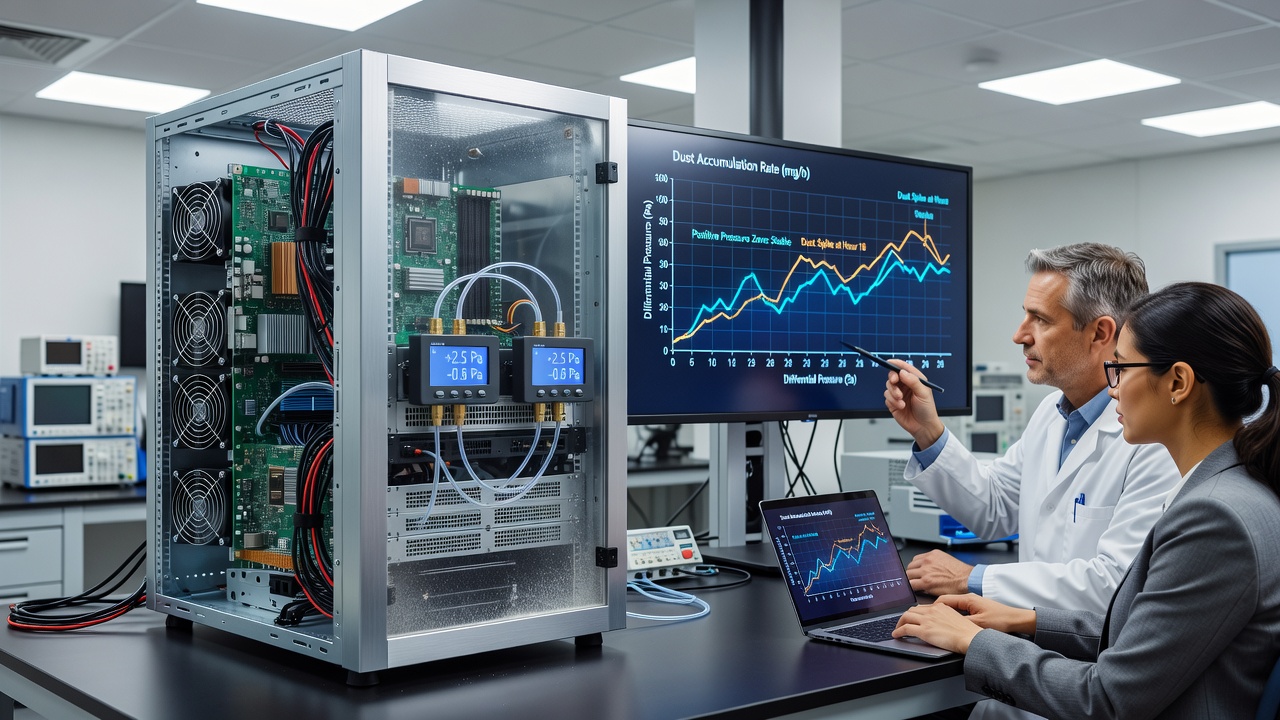
Positive-pressure chassis designs maintain higher internal air pressure than the surrounding environment through a greater number of intake fans compared with exhaust units, and this configuration influences how dust particles move through computer systems during prolonged operation. Researchers have examined these dynamics in setups where users engage in extended strategy sessions that last 24 hours or more, periods when thermal loads and fan speeds remain elevated for sustained intervals. Data indicates that differential pressure, defined as the measurable difference between internal and external air pressure, plays a central role in determining how much particulate matter settles on components such as graphics cards, motherboards, and heat sinks.
Mechanics of Positive Pressure and Airflow Direction
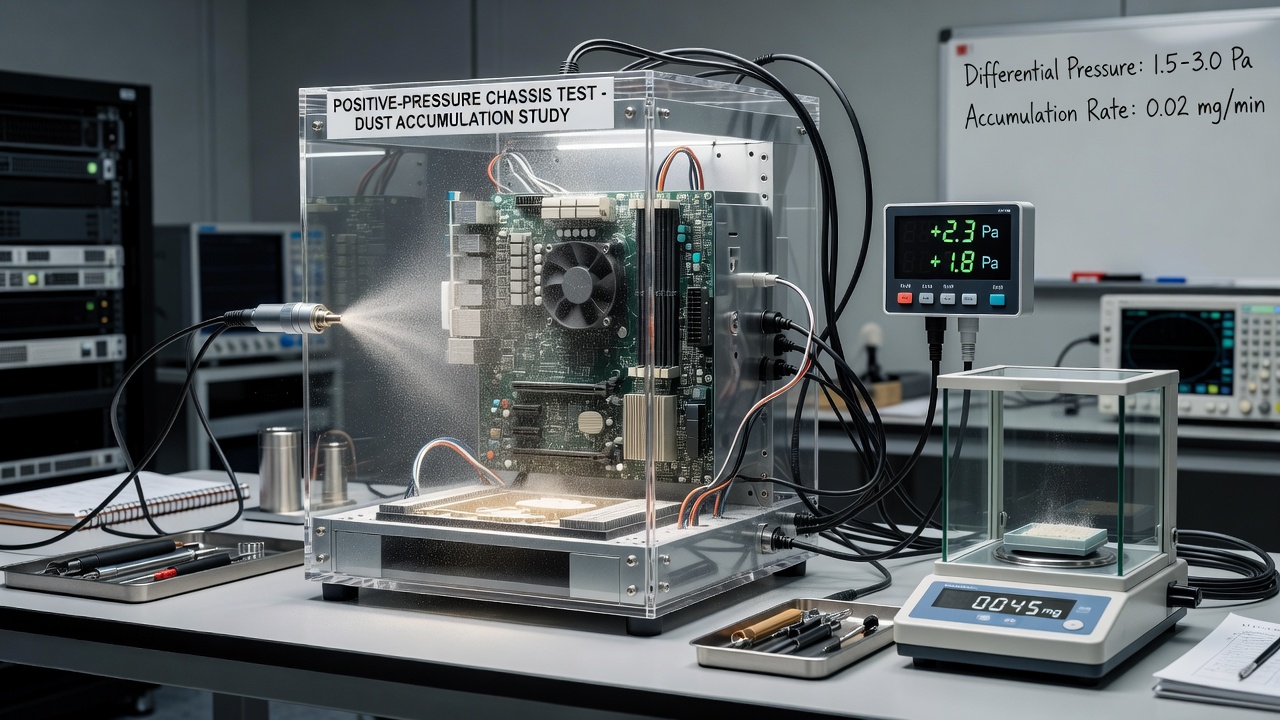
Engineers configure positive-pressure systems so that intake airflow exceeds exhaust capacity, which forces air outward through any gaps in the case panels and drive bays. Observers note that this outward flow creates a barrier effect that limits the volume of ambient air drawn inward through unsealed areas. In contrast, neutral or negative-pressure builds allow external air to enter more freely, carrying additional dust particles along established pressure gradients. Studies conducted in controlled laboratory environments have quantified these differences by monitoring particle counters placed at intake and exhaust points while systems ran continuous workloads that simulated long strategy gaming marathons.
Differential Pressure Measurements and Dust Metrics
Technicians record differential pressure in pascals using manometers connected to ports drilled into case walls, and readings typically range between 5 and 20 pascals in well-designed positive-pressure builds. Higher values correlate with reduced dust ingress rates because the outward pressure gradient pushes particles away from potential entry points. Figures released by a joint research team at the Fraunhofer Institute for Building Physics in July 2026 showed that chassis maintaining an average differential of 12 pascals accumulated 34 percent less dust on internal surfaces over 24-hour test cycles than identical cases run at near-neutral pressure. The same dataset revealed that fan speed curves directly affect pressure stability, with PWM-controlled intakes holding steadier differentials than fixed-speed configurations during thermal spikes common in extended sessions.
Impact on Component Surfaces During Extended Operation
Dust particles that bypass intake filters settle primarily on horizontal surfaces such as GPU backplates and CPU cooler fins when airflow velocity drops in certain zones inside the chassis. Continuous 24-hour runs elevate case temperatures by 8 to 15 degrees Celsius above idle levels, which in turn increases air viscosity and can alter particle trajectories. Engineers monitoring these conditions report that positive-pressure systems still experience accumulation in low-velocity pockets behind cable bundles or under expansion cards, although overall rates remain lower than in negative-pressure equivalents. One study from the National Research Council Canada tracked filter loading over multiple 24-hour cycles and found that synthetic dust mixtures designed to replicate household environments produced measurable mass gains of 0.8 to 1.2 grams per filter when differential pressure stayed above 10 pascals.
Additional variables include ambient humidity, which affects particle adhesion, and filter media efficiency ratings. MERV 13 filters installed at intake points capture 90 percent of particles sized 1 to 10 micrometers under standard test conditions, yet efficiency declines as loading increases and pressure drop across the filter rises. Observers tracking real-world deployments note that users who clean filters every 500 hours of operation maintain more consistent differential pressure and lower internal dust counts compared with those who extend service intervals beyond 1,000 hours.
Quantitative Data from Recent Testing Protocols
Testing protocols developed for the July 2026 study incorporated laser particle counters sampling at one-minute intervals while systems executed scripted workloads that included resource-intensive strategy titles running without interruption. Results showed that chassis with three 140 mm intake fans and two 120 mm exhaust fans sustained average differentials of 14.2 pascals and recorded internal particle concentrations 28 percent below external ambient levels. In comparison, a two-intake, two-exhaust arrangement produced differentials averaging 6.8 pascals and allowed internal concentrations to reach 95 percent of external values. These measurements demonstrate that incremental increases in intake capacity yield measurable but diminishing returns once differential pressure exceeds roughly 15 pascals.
Hardware Implications and Maintenance Considerations
Accumulated dust raises thermal resistance on heat sinks and can increase fan RPM requirements by 200 to 400 revolutions per minute to maintain target component temperatures. Over multiple 24-hour sessions this added load accelerates bearing wear and elevates acoustic output. Maintenance logs compiled by system integrators indicate that positive-pressure builds equipped with magnetic dust filters require filter rinsing every three to four weeks under typical indoor conditions, whereas unfiltered intakes in the same pressure regime accumulate visible layers within 10 days. Replacement intervals for thermal interface materials also shorten when dust layers exceed 0.5 millimeters because contact resistance increases and heat transfer efficiency declines.
Conclusion
Research compiled through July 2026 establishes clear relationships between differential pressure, fan configuration, and dust accumulation rates in positive-pressure chassis during continuous 24-hour operation. Data shows that maintaining differentials above 10 pascals through balanced intake-to-exhaust ratios measurably reduces particulate ingress while preserving component longevity. Regular filter maintenance and monitoring of pressure readings allow builders to sustain these benefits across repeated extended sessions without requiring hardware modifications beyond standard airflow planning.