Quantum Dot Enhancements Transform Color Reproduction Standards Across Esports Arenas
Written by Petra Carter · Aug 4, 2026
Quantum Dot Enhancements Transform Color Reproduction Standards Across Esports Arenas
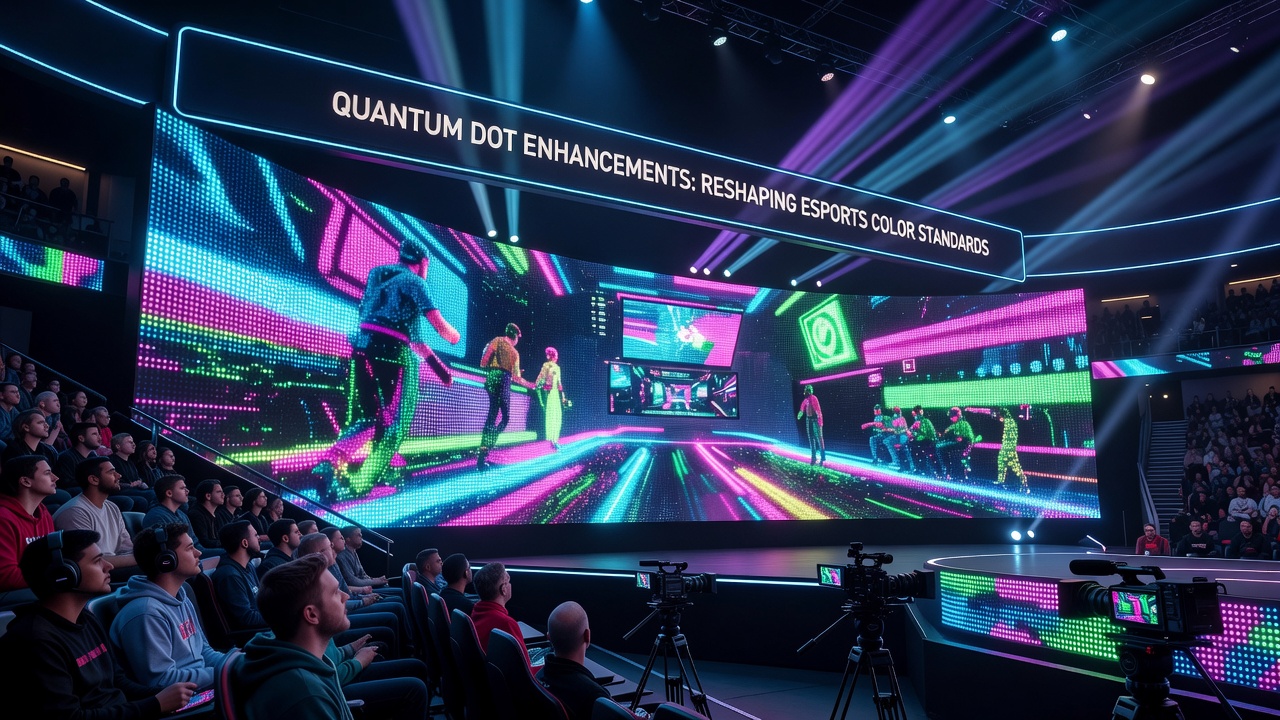
Quantum dots consist of nanoscale semiconductor particles that emit precise wavelengths of light when excited by a backlight, and this mechanism allows displays to achieve wider color gamuts with higher purity than traditional LED or OLED panels. Esports arenas have adopted these enhancements at a rapid pace because competitive titles demand consistent color accuracy across multiple viewing angles and lighting conditions. Data from display manufacturers indicates that quantum dot layers can expand the color volume by up to 30 percent compared with standard LCD backlights, which directly affects how game developers calibrate in-game assets for professional play. Observers note that color reproduction standards in esports venues previously relied on DCI-P3 or Rec.709 specifications, yet quantum dot integration now pushes many installations toward Rec.2020 coverage. This shift occurs because the particles can be tuned to narrow emission peaks at red, green, and blue wavelengths, reducing spectral overlap and increasing saturation without raising power consumption. Arena operators report that spectator screens and player monitors maintain uniform chromaticity coordinates even during extended events that span multiple days.Technical Mechanisms Driving Color Consistency
Engineers integrate quantum dot films or quantum dot light-emitting diodes into arena-scale displays by placing the particles between the backlight array and the liquid crystal layer, and this configuration converts broad-spectrum blue light into highly saturated primaries. Research from display laboratories shows that peak brightness levels can exceed 2000 nits while preserving color accuracy, a combination that supports HDR workflows in titles such as those featured in major tournaments. The improved efficiency also reduces heat output, which helps maintain stable performance across long matches where equipment runs continuously.
Color management systems in esports venues now incorporate quantum dot calibration profiles that map input signals to the expanded gamut, and these profiles prevent clipping in highlights or crushing in shadows. Technicians adjust white point and gamma curves on-site using spectroradiometers calibrated to the specific quantum dot emission spectra. Data collected during venue commissioning reveals that delta-E values remain below 2.0 across the entire screen surface once quantum dot panels are properly profiled, meeting stricter tolerances than earlier LED installations.
Impact on Tournament Operations and Broadcast Standards
Event organizers coordinate with equipment suppliers to ensure every monitor and jumbotron in the arena adheres to the same color reproduction targets, and this uniformity eliminates discrepancies that previously appeared when players viewed the same scene on different hardware. In August 2026 several international circuits updated their technical rider documents to require quantum dot panels for all official stations, citing improved color fidelity during live broadcasts and on-site replays. The change aligns with evolving recommendations from standards bodies that track display technology adoption rates across entertainment sectors.
Broadcast partners benefit because quantum dot-enhanced feeds deliver consistent color when downconverted for home viewers, and this consistency reduces post-production grading time. Production teams capture footage directly from the arena signal chain without extensive correction passes, since the source material already occupies a larger portion of the target gamut. Figures from production studies indicate that color grading sessions shortened by approximately 15 percent once venues standardized on quantum dot output.
Player Performance and Visual Clarity Considerations
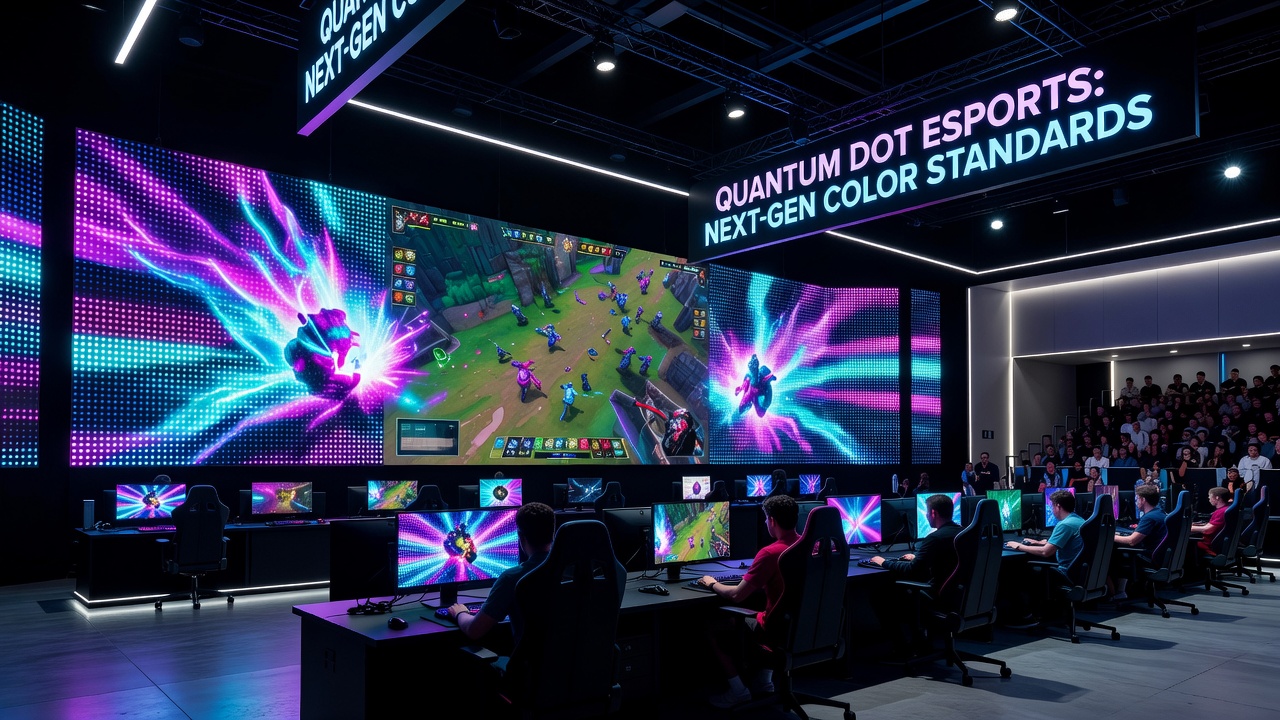
Competitive players rely on precise color differentiation for target identification and environmental cues, and quantum dot panels provide higher contrast between similar hues that appear in fast-paced scenes. Studies conducted at university laboratories specializing in human factors engineering demonstrate that participants identify colored elements faster under quantum dot illumination than under conventional backlights when ambient light levels fluctuate. Arena lighting designers account for this by balancing stage illumination with screen output to avoid veiling glare that could reduce perceived saturation.
Peripheral equipment such as referee tablets and analyst stations also receive quantum dot upgrades, ensuring that rule enforcement decisions based on visual evidence maintain the same color reference as player displays. This alignment prevents disputes arising from mismatched color interpretation across different hardware categories. Maintenance crews perform periodic recalibrations using portable colorimeters to verify ongoing compliance with venue specifications throughout multi-week competition seasons.
Future Standardization Efforts
Industry groups continue to develop unified testing protocols that quantify quantum dot performance under arena-specific conditions such as high ambient light and wide viewing angles. These protocols incorporate metrics beyond simple gamut coverage, including temporal color stability during rapid frame-rate transitions common in esports titles. Participation from manufacturers across Asia, Europe, and North America ensures that emerging guidelines reflect global supply chain realities rather than regional preferences alone.
Training programs for venue technical staff now include modules on quantum dot-specific calibration routines, and certification courses emphasize measurement techniques that account for the unique spectral characteristics of the technology. The result is a growing pool of technicians capable of maintaining color accuracy across expanding arena networks without reliance on external specialists for every event.
Conclusion
Quantum dot enhancements have established new benchmarks for color reproduction in esports environments by delivering measurable improvements in gamut coverage, brightness consistency, and calibration precision. Venue operators, broadcast partners, and competitive circuits have responded by updating technical requirements and operational procedures to leverage these capabilities. Continued refinement of standards and training practices supports sustained adoption as display technology evolves and event scales increase.