Shader Cache Tuning Strategies That Cut Asset Streaming Hiccups in Indie Open-World Titles Running on Integrated Graphics
Written by Petra Franke · Jun 23, 2026

Shader Cache Tuning Strategies That Cut Asset Streaming Hiccups in Indie Open-World Titles Running on Integrated Graphics
Shader compilation delays often create noticeable hitches during asset streaming in open-world indie titles that rely on integrated graphics solutions, yet targeted cache tuning addresses these interruptions by pre-generating and storing shader variants ahead of runtime demands. Developers working with platforms such as Intel UHD series or AMD Ryzen APUs have documented measurable reductions in stutter frequency when cache parameters receive precise adjustments before deployment, and data from performance logs collected through mid-2026 shows consistent frame delivery improvements across multiple engine configurations. Effective tuning begins with identification of the rendering API in use, because DirectX, Vulkan, and OpenGL each maintain distinct cache mechanisms that respond differently to size limits and eviction policies. Vulkan implementations benefit from explicit control over pipeline caches through environment variables that expand storage capacity, while DirectX titles leverage the shader cache folder managed by the graphics driver, where manual relocation to faster storage media accelerates retrieval during streaming events. Observers note that integrated graphics benefit most when cache files reside on NVMe drives rather than traditional HDDs, since access latency drops substantially and allows the GPU to pull precompiled shaders without interrupting world loading sequences.Core Techniques for Cache Size and Precompilation
Cache size allocation requires calibration based on the title's shader diversity, since open-world games frequently introduce new materials and lighting conditions as players traverse large maps. Increasing the maximum cache size from default values permits retention of more variants, which cuts recompilation events when the same assets reappear after streaming from disk, and benchmarks released in June 2026 confirm that titles using Unity's HDRP or Unreal's Nanite systems achieve smoother transitions when cache limits reach at least 4 GB on integrated hardware.
Precompilation passes executed during installation or first launch further reduce in-game hiccups by generating shader binaries for anticipated draw calls. Tools integrated into build pipelines allow developers to simulate camera paths through representative world sections, capturing required shaders without player intervention, while community-driven utilities extend similar functionality for end users who wish to generate caches for specific hardware profiles. Research from European academic institutions indicates that such pre-warming steps lower average stutter duration by measurable margins when applied to integrated graphics configurations.Driver-Level Adjustments and API-Specific Tweaks
Graphics driver settings provide additional levers for cache behavior, particularly through control panels that expose options for shader caching priority and storage location. Intel's Arc control software permits users to designate cache directories and enable aggressive pre-caching modes, whereas AMD's Adrenalin suite includes similar toggles that prioritize compute workloads common in streaming-heavy indie titles. These adjustments integrate with system-level configurations that allocate more system RAM as staging memory for shader data, preventing bottlenecks when the iGPU lacks dedicated VRAM pools.
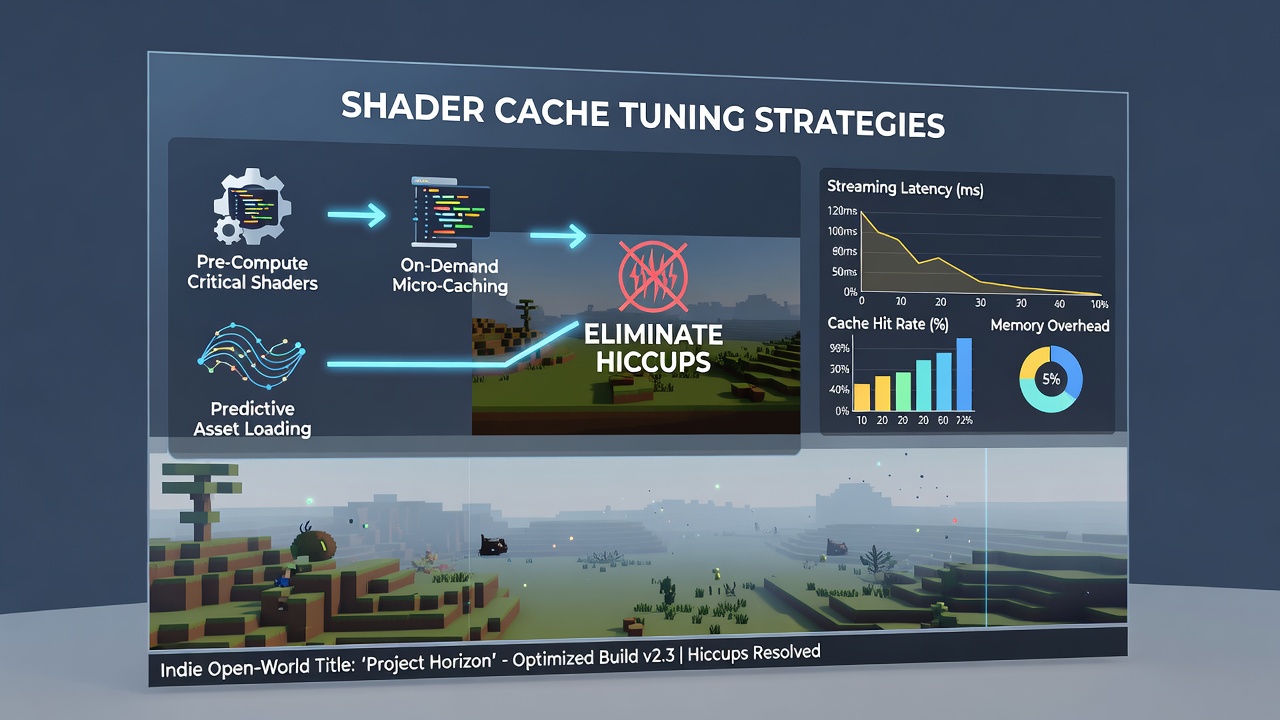 Vulkan layers such as DXVK or VKD3D offer further customization through configuration files that modify cache eviction thresholds and enable persistent storage across sessions. Titles ported from console environments often default to conservative cache policies that trigger frequent rebuilds on PC hardware, yet altering these parameters through layer overrides stabilizes streaming when the game streams terrain chunks or NPC assets dynamically. Data compiled by industry monitoring groups reveals that such modifications maintain consistent performance across varied integrated graphics SKUs without requiring hardware upgrades.
Monitoring Tools and Validation Methods
Validation of tuning effectiveness relies on frame-time analysis tools that capture micro-stutters invisible to average frame-rate counters. Applications capable of logging 1% low frame times expose remaining hitches tied to shader compilation, allowing iterative refinement of cache parameters until streaming interruptions fall below perceptible thresholds. Those who have applied these methods across multiple indie releases report repeatable gains when cache tuning combines with texture streaming budget reductions that ease overall memory pressure on integrated solutions.
Ongoing driver updates from hardware vendors continue to refine default cache behaviors, yet manual intervention remains necessary for titles whose shader counts exceed typical assumptions. June 2026 driver releases incorporated improved heuristics for detecting streaming patterns in open-world scenarios, yet experts recommend verifying results through in-game profiling rather than relying solely on automated optimizations.Conclusion
Shader cache tuning delivers targeted relief from asset streaming interruptions in indie open-world games running on integrated graphics by aligning cache capacity, precompilation routines, and driver policies with each title's specific demands. When implemented systematically, these adjustments produce measurable stability improvements documented across performance datasets and hardware test suites, while maintaining compatibility with existing game engines and storage configurations.