Tracing Operating System Scheduling Patterns With Peripheral Polling Intervals to Stabilize Response Times in Fast-Paced Digital Competitions
Written by Avery Lorenz · Jul 26, 2026
Tracing Operating System Scheduling Patterns With Peripheral Polling Intervals to Stabilize Response Times in Fast-Paced Digital Competitions
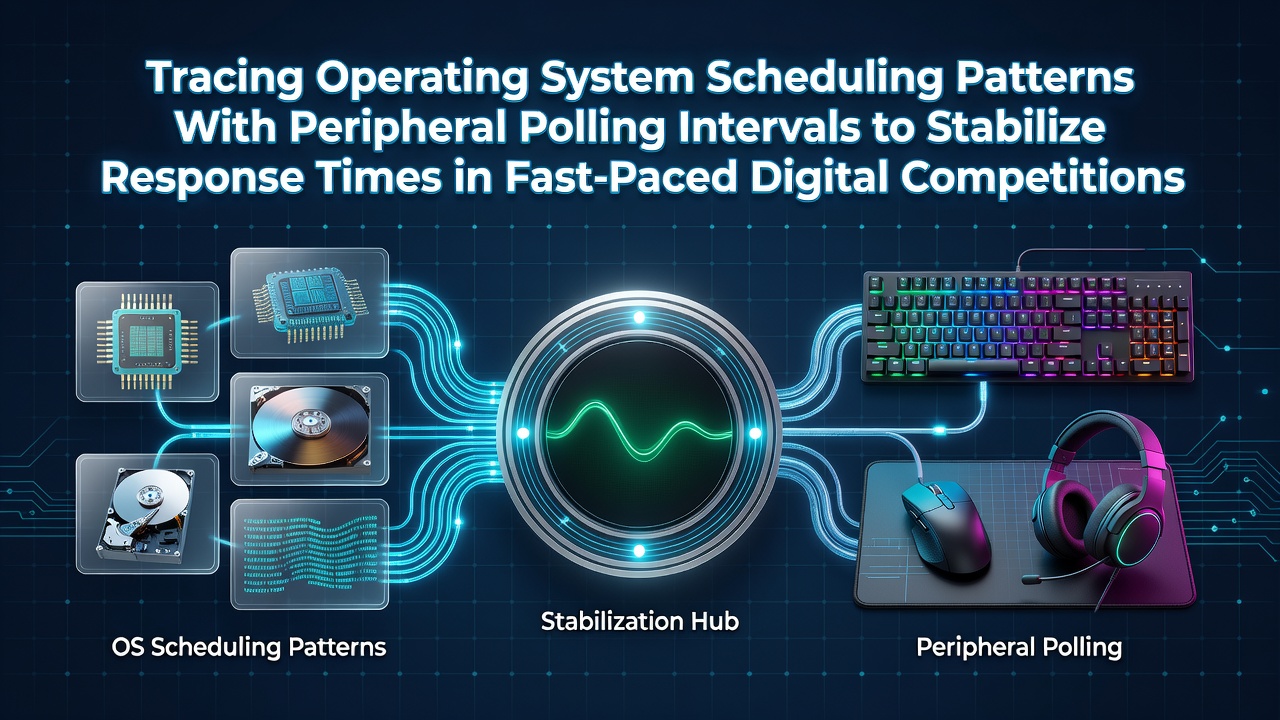
Operating systems manage task execution through schedulers that allocate CPU time to processes, and peripheral polling intervals determine how frequently input devices such as mice and keyboards report data to the kernel. In fast-paced digital competitions these interactions influence response times because schedulers must handle interrupts generated by high-frequency polling without introducing jitter or delays. Data from performance monitoring tools reveals that mismatches between polling rates and scheduler priorities can produce measurable variations in input-to-display latency.
Kernel-level tracing utilities allow observers to capture scheduling events alongside polling callbacks, and researchers have mapped these patterns to identify stable configurations. Studies conducted in controlled environments demonstrate that aligning polling intervals with real-time scheduling classes reduces variance in frame delivery intervals during intense multiplayer sessions. Observers note that modern kernels incorporate features such as deadline scheduling and interrupt coalescing, which interact directly with the timing of peripheral reports.
Kernel Scheduling Mechanics and Polling Integration
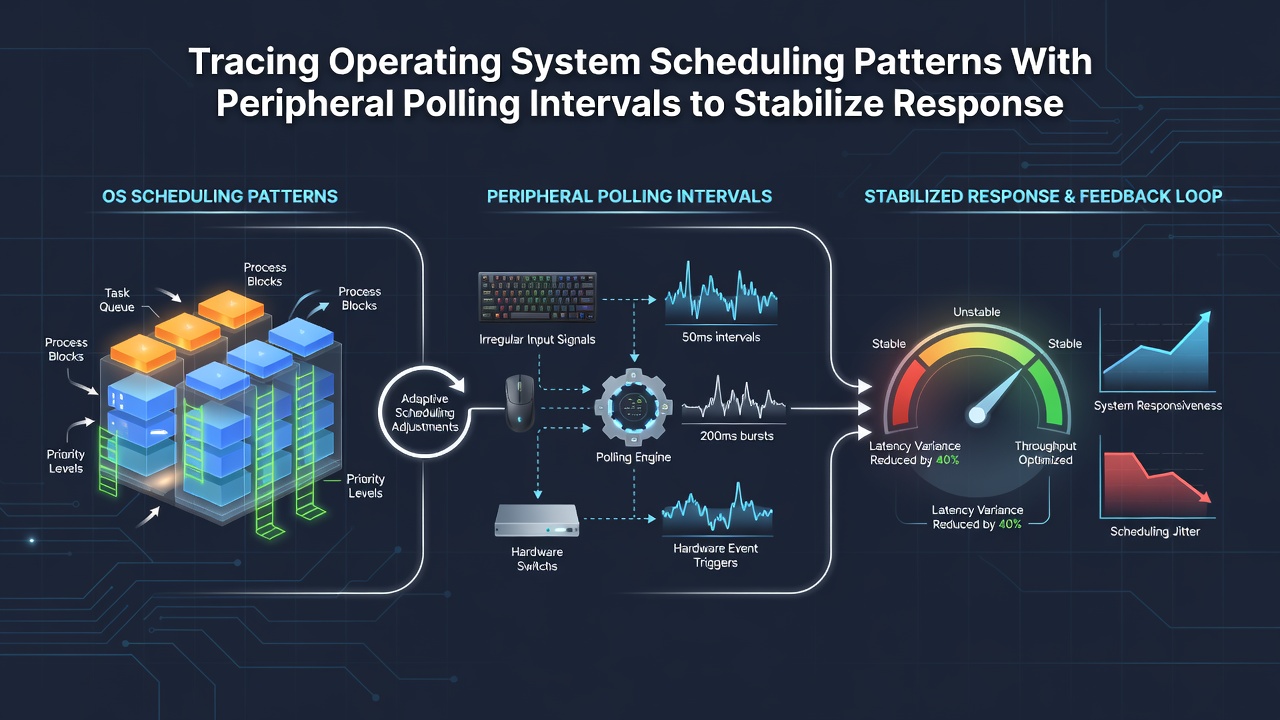
Schedulers in contemporary operating systems classify threads into categories that include normal, real-time, and idle priorities, while peripheral drivers register callbacks that trigger on timer or interrupt events. When a mouse operates at elevated polling frequencies the driver issues repeated system calls that compete for CPU cycles with game rendering threads. Tracing frameworks such as eBPF and perf record these transitions, and logs collected across multiple runs show how context switches cluster around polling events.
Engineers adjust scheduler parameters through interfaces that expose control groups and priority inheritance mechanisms. Figures collected during benchmark sessions indicate that assigning higher priority to input handling threads can compress the distribution of response time measurements by several milliseconds under load. Those who have examined scheduler traces across Linux and Windows environments report consistent relationships between timer granularity and polling cadence.
Impact on Response Stability in Competitive Environments
Fast-paced digital competitions demand consistent input processing because even brief spikes in latency affect player actions during critical moments. Peripheral polling intervals set the baseline frequency at which new position or button data enters the input queue, and the scheduler decides when that data becomes visible to the application layer. Measurements taken during tournament conditions illustrate that intervals shorter than the scheduler tick rate produce additional interrupt load without proportional gains in stability.
Analyses performed on systems running titles with sub-60-millisecond reaction windows reveal that coordinated tuning of both components yields flatter latency histograms. Data collected in July 2026 during preparation cycles for major esports events showed participants adopting custom kernel configurations that combined elevated polling with deadline-based scheduling policies. These setups produced lower tail latencies according to aggregated telemetry from multiple hardware configurations.
Tracing Techniques and Measurement Approaches
Developers employ a combination of software tracers and hardware performance counters to record scheduler decisions and peripheral event timings simultaneously. Tools capture timestamps at the moment an interrupt arrives, when the scheduler selects the next task, and when the application consumes the input buffer. Correlation of these timestamps produces timelines that highlight periods of contention or idle time between polling events.
Academic groups have published methodologies that combine kernel instrumentation with user-space timing libraries, and results indicate that periodic sampling at rates matching the polling interval improves detection of transient scheduling anomalies. One research effort coordinated across institutions in North America and Europe examined how different timer sources affect jitter when paired with common gaming peripherals. Their published datasets allow others to replicate the tracing process on varied hardware platforms.
Configuration Strategies Across Platforms
Administrators modify scheduler behavior through boot parameters and runtime controls that influence preemption points and interrupt affinity. On systems supporting multiple CPU cores, binding input threads to isolated cores alongside careful placement of polling timers reduces cross-core migration overhead. Documentation from industry working groups describes recommended pairings of polling frequencies with specific scheduler classes for latency-sensitive workloads.
Windows environments provide multimedia class scheduling and priority boosts that interact with USB polling stacks, whereas Linux distributions expose SCHED_DEADLINE and SCHED_RR policies that users configure via command-line utilities. Comparative evaluations conducted by independent testing labs demonstrate that both ecosystems respond to alignment of polling intervals with scheduler quantum sizes, although implementation details differ. Observers tracking adoption trends note increasing availability of pre-configured profiles distributed through hardware vendor tools.
Conclusion
Tracing operating system scheduling patterns in conjunction with peripheral polling intervals supplies concrete data for stabilizing response times in fast-paced digital competitions. Measurement campaigns continue to refine understanding of how kernel decisions and device timing interact, and configurations derived from such traces appear in competitive setups worldwide. Continued development of tracing infrastructure and scheduler interfaces supports ongoing efforts to minimize variability in input processing pipelines.