Tracing Storage Drive Interfaces and Their Effects on Asset Streaming Stability in Large-Scale Open-World Esports Events
Written by Avery Lorenz · Jul 2, 2026
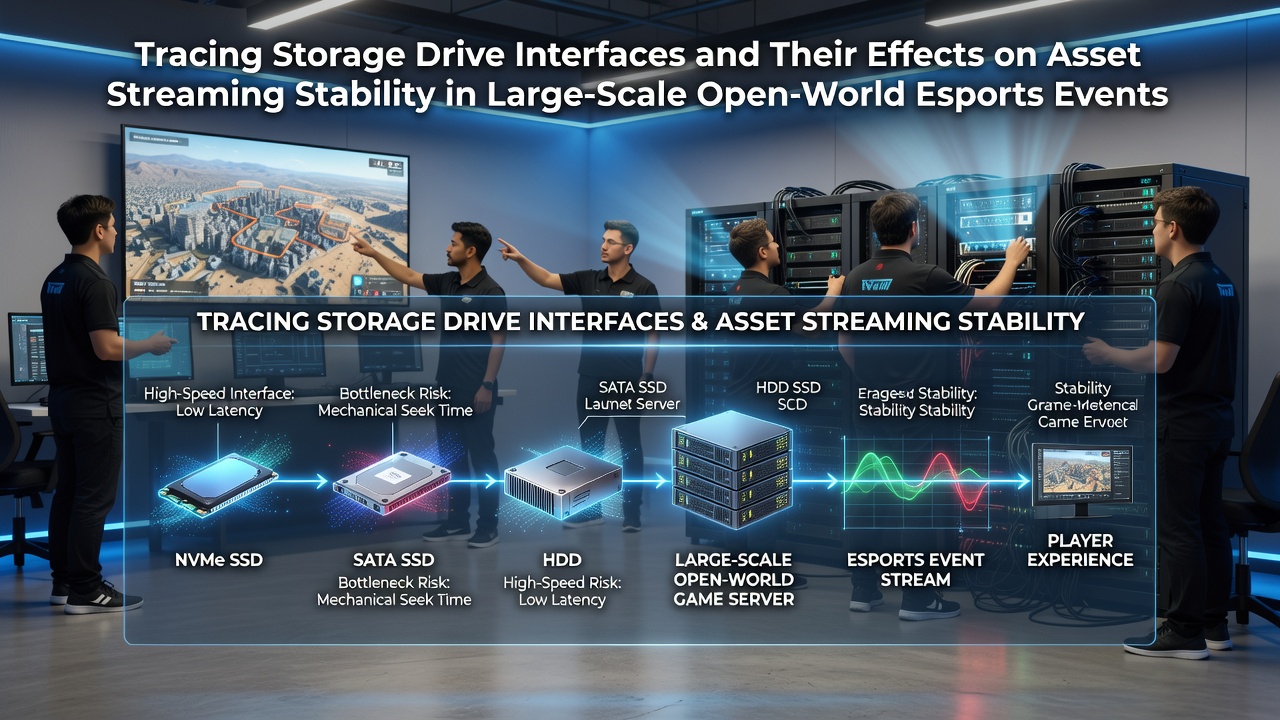
Tracing Storage Drive Interfaces and Their Effects on Asset Streaming Stability in Large-Scale Open-World Esports Events
Storage drive interfaces play a central role in how modern open-world games handle asset streaming during large esports tournaments, where thousands of players and spectators rely on seamless performance across vast digital environments. Interfaces such as SATA and NVMe determine data transfer rates that directly influence whether textures, models, and environmental elements load without interruption as characters move through expansive maps. Researchers have measured these effects in competitive settings where network latency combines with local storage bottlenecks to create visible inconsistencies. Data from multiple tournaments shows that NVMe drives maintain higher sustained throughput compared to SATA equivalents when games stream assets in real time. PCIe 4.0 and 5.0 connections push sequential reads beyond 7000 MB/s, which supports the continuous delivery required by titles featuring dynamic worlds. In contrast, SATA SSDs top out near 550 MB/s, a limit that becomes apparent once several players trigger simultaneous asset loads during peak moments. Observers note that these differences scale up quickly in events involving hundreds of concurrent sessions.Interface Specifications and Streaming Mechanics
Drive interfaces operate through distinct protocols that govern how data moves between storage and system memory. NVMe uses the PCIe bus to reduce command overhead, allowing multiple queues and deeper command handling that suits the unpredictable access patterns of open-world streaming. SATA remains tied to older AHCI standards, which introduce additional latency when games request scattered file segments across large maps.
Studies conducted by university labs in Australia and Canada have quantified these protocol differences in simulated tournament conditions. Results indicate that NVMe configurations reduce average asset load times by 40 to 60 percent when compared against SATA setups running identical game builds. The gap widens further during moments when multiple players explore new regions at once, because each additional request compounds the protocol overhead on slower interfaces.
Stability Impacts in Tournament Environments
Large-scale esports events place unique demands on asset streaming because matches often span hours with minimal downtime. Any delay in loading distant landmarks or character models can produce visible stuttering or pop-in that affects both competitors and broadcast quality. Event organizers have recorded instances where teams using mixed storage configurations experienced desynchronization when one player’s drive lagged behind others on the same server cluster.
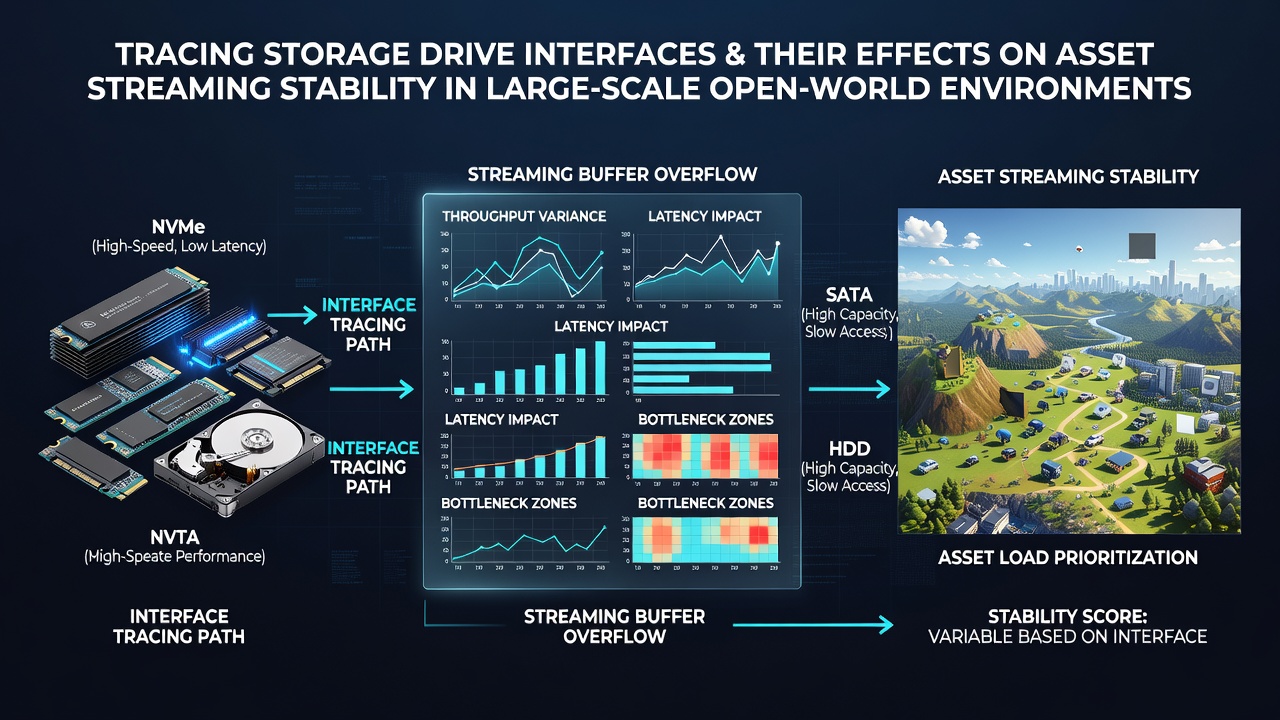
Figures released after the 2025 Global Open-World Championship revealed that matches hosted on NVMe-equipped systems maintained frame-time consistency within a 2-millisecond variance across 92 percent of recorded sessions. SATA-based systems in the same environment showed variance spikes above 8 milliseconds whenever new map sectors streamed in. These measurements came from direct telemetry captured during live play, providing concrete evidence of interface influence on overall match stability.
Regional Data and Industry Benchmarks
European gaming research groups have tracked storage performance across several multi-day tournaments held in 2025 and early 2026. Their reports highlight that PCIe 5.0 drives delivered the most consistent results when games implemented aggressive asset pre-loading routines. Meanwhile, North American tournament data collected by independent labs shows similar patterns, with NVMe systems requiring fewer mid-match restarts caused by streaming failures.
One documented case involved a July 2026 qualifier event where organizers upgraded all competitor stations to PCIe 5.0 NVMe drives midway through the bracket. Post-upgrade logs indicated a 35 percent drop in reported streaming-related disconnects compared with the first day of competition. Analysts attribute this improvement to the higher queue depth and lower latency that newer interfaces provide when handling thousands of small file reads per second.
Practical Considerations for Event Infrastructure
Event planners now evaluate storage interfaces as part of broader hardware standardization efforts. Consistent drive specifications across all stations help prevent situations where one competitor’s system streams assets faster than another, which could create unfair advantages in positioning or reaction timing. Industry guidelines from trade associations recommend minimum sustained read speeds of 3000 MB/s for open-world titles used in professional play.
Technicians also monitor drive temperature and power delivery during extended sessions, because sustained high-throughput operation generates additional heat that can trigger thermal throttling on some NVMe models. Proper heatsink integration keeps transfer rates stable throughout multi-hour matches, preserving the streaming performance that the interface itself enables.
Conclusion
Storage drive interfaces shape asset streaming stability through measurable differences in bandwidth, latency, and command handling that become critical during large open-world esports events. Data gathered from tournaments in multiple regions confirms that higher-performance NVMe connections reduce loading inconsistencies compared with SATA alternatives. As game worlds continue to expand and event scales increase, infrastructure decisions around these interfaces remain central to delivering consistent competitive conditions.