Voltage Regulation Dynamics in Overclocked Gaming Systems Under Extended Strategy Session Demands
Written by Petra Carter · Sep 3, 2026
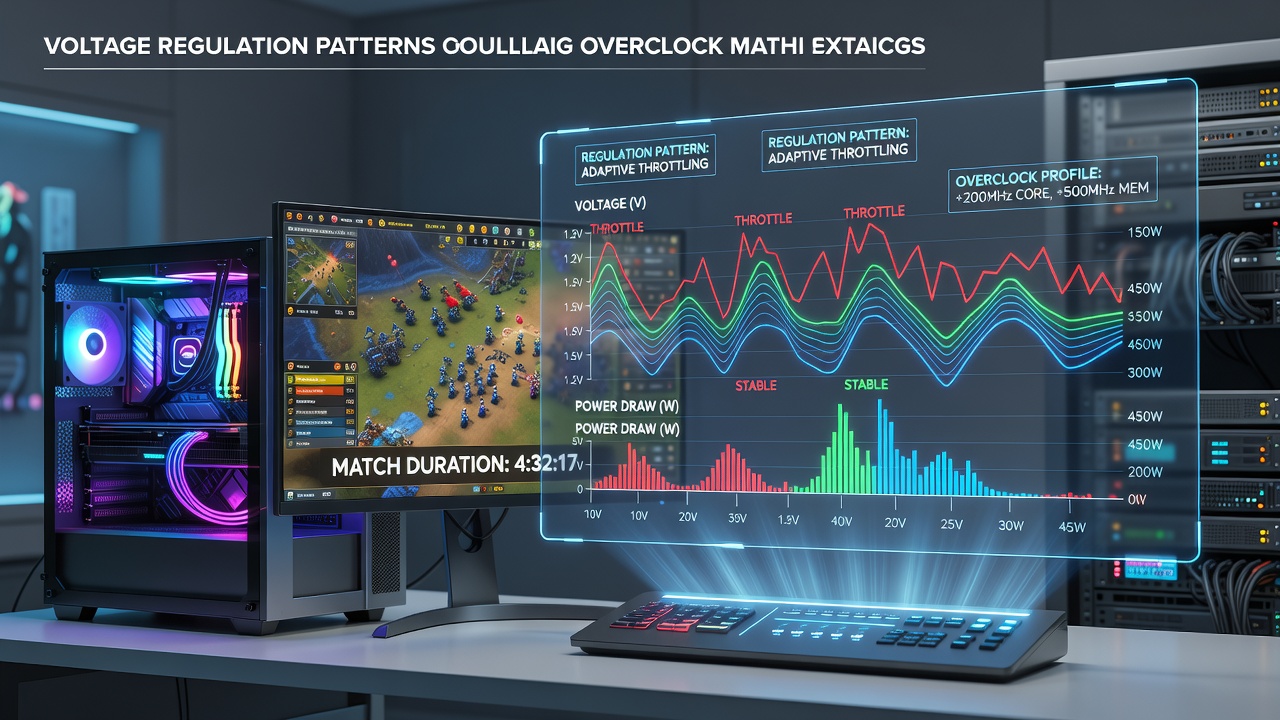
Voltage Regulation Dynamics in Overclocked Gaming Systems Under Extended Strategy Session Demands
Overclocked rigs push central processing units and graphics processors beyond factory specifications, and voltage regulation modules maintain stable power delivery during the sustained computational loads that define extended strategy matches, according to data from hardware monitoring tools used in competitive gaming environments. These matches often span several hours with consistent CPU utilization above 80 percent alongside periodic GPU spikes, creating conditions where even minor voltage fluctuations can affect frame consistency and system stability.
Core Components of Voltage Regulation Modules
Voltage regulator modules convert higher input voltages from power supply units into precise levels required by modern processors, and they rely on multiple power phases, MOSFETs, and chokes to distribute current evenly. Researchers at institutions across North America have documented how phase count directly correlates with the ability to handle prolonged high-draw scenarios without excessive ripple, while European studies emphasize the role of controller algorithms in compensating for load changes during turn-based or real-time strategy titles. In practice, systems with eight or more phases demonstrate tighter voltage tolerances under multi-hour sessions compared with four-phase designs, as measured through oscilloscope captures in laboratory settings.
Overclocking increases both voltage requests and current demands, which places additional stress on these components and can lead to thermal buildup in the VRM heatsinks themselves. Observers note that strategy games generate steady rather than bursty loads, allowing heat to accumulate gradually and potentially trigger thermal throttling in the voltage circuitry long before the CPU or GPU reaches critical temperatures.
Observed Patterns During Prolonged Matches
Monitoring data collected from competitive events reveals distinct voltage sag patterns that emerge after approximately 90 minutes of continuous play, particularly when players engage in late-game scenarios involving large unit counts and complex pathfinding calculations. These sags typically range between 10 and 25 millivolts below target values on unlocked processors, and they become more pronounced when ambient room temperatures rise above 25 degrees Celsius. Data shows that rigs equipped with active VRM cooling maintain closer adherence to requested voltages throughout sessions lasting four hours or more.
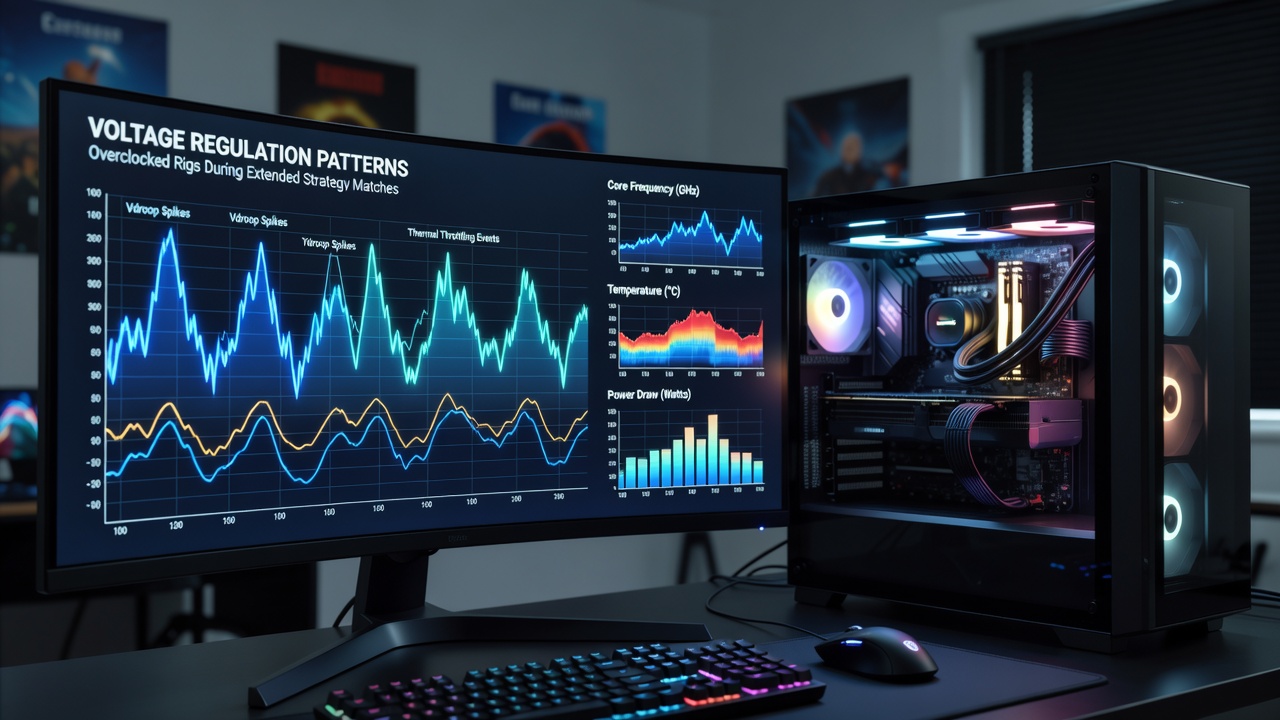
Power delivery networks exhibit a secondary pattern where transient spikes occur during map loading or AI calculation phases, yet the recovery time to stable levels lengthens as overall session duration increases. Figures from Australian research groups indicate that this lengthening recovery correlates with rising MOSFET temperatures rather than capacitor aging in most tested configurations. Systems running BIOS profiles with adaptive voltage offset rather than fixed offsets display smoother regulation curves, especially when paired with memory kits operating at elevated transfer rates.
Environmental and Configuration Influences
Case airflow, ambient conditions, and power supply quality all interact with voltage regulation performance during extended matches. Tests conducted by academic teams in Canada have shown that positive pressure airflow setups reduce VRM temperature gradients by up to 12 degrees Celsius compared with exhaust-only configurations, resulting in fewer instances of voltage droop compensation. Meanwhile, reports from regulatory and standards bodies highlight the importance of 80 Plus Gold or higher certified power supplies in delivering clean input voltage to the 24-pin and EPS connectors that feed the regulation circuitry.
September 2026 saw the release of updated guidelines from the National Institute of Standards and Technology addressing measurement protocols for sustained-load voltage behavior in consumer computing platforms, which gaming hardware analysts have begun incorporating into their testing methodologies. These protocols recommend logging both average and peak-to-peak voltage values at one-second intervals across multi-hour periods to capture the gradual drift patterns characteristic of strategy gameplay.
Practical Mitigation Approaches
Users often apply undervolting offsets in conjunction with overclocks to reduce overall heat generation while preserving performance margins, and data indicates this combination can extend stable regulation periods by 30 to 40 percent in documented cases. Additional techniques include upgrading VRM heatsinks, adding dedicated fan curves for the MOSFET area, and ensuring motherboard power limit settings remain within the capabilities of the installed regulation hardware. Industry organizations focused on computing standards have published reference tables showing recommended phase counts for different overclock targets based on projected session lengths typical in esports strategy titles.
Software utilities that monitor per-phase current distribution provide early warnings when individual phases begin to shoulder disproportionate loads, allowing adjustments before regulation quality degrades noticeably. Such tools have become standard in tournament environments where multiple rigs operate simultaneously for extended periods.
Conclusion
Voltage regulation patterns in overclocked systems during long strategy sessions follow predictable trajectories influenced by thermal accumulation, phase count, and input power quality. Continued refinement of monitoring standards and component designs supports more consistent performance across multi-hour matches, with research from varied geographic regions contributing to improved understanding of these dynamics.